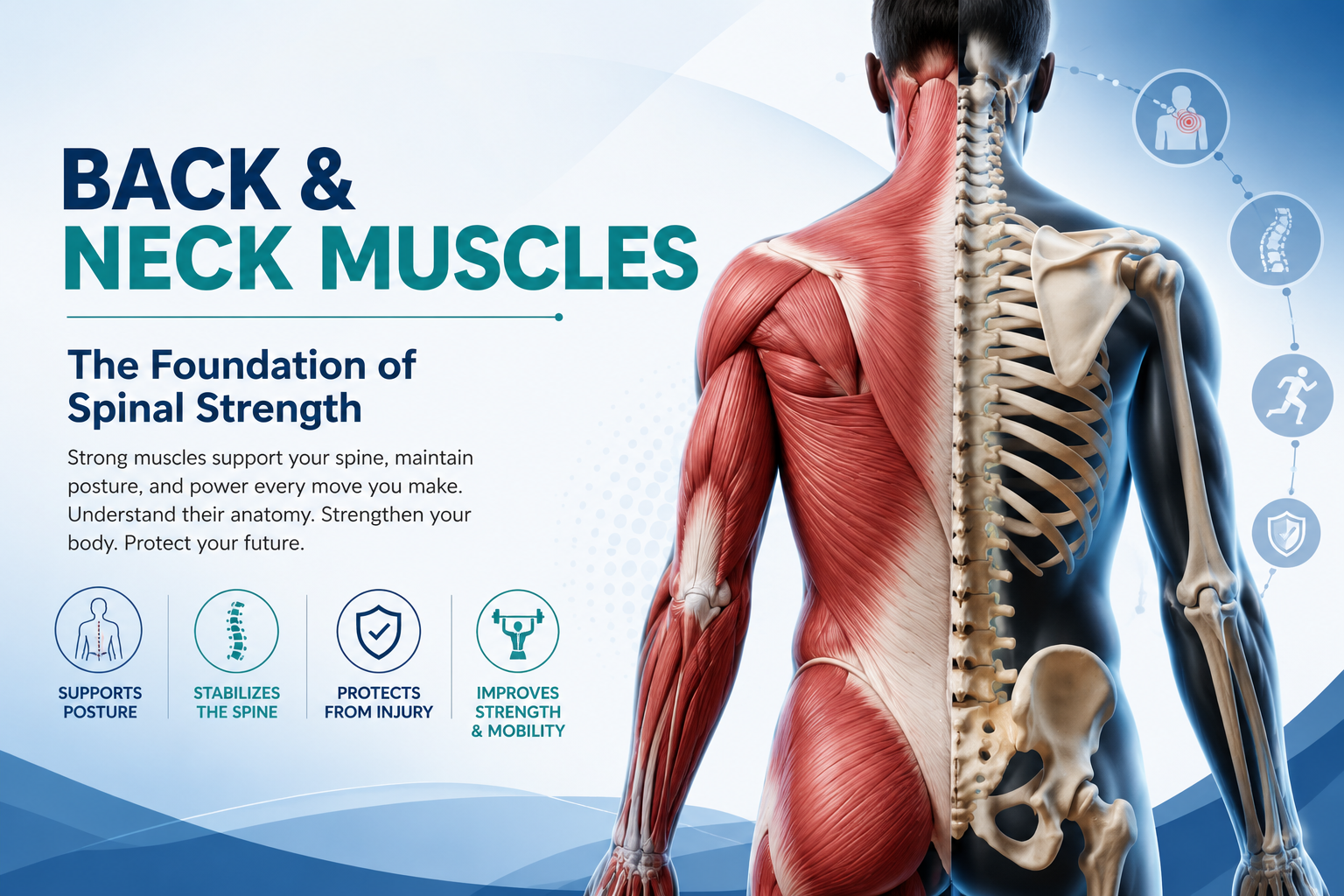
Back and Neck Muscles: Anatomy, Functions & Spine Support
Understanding the Back and Neck Muscles
The muscles surrounding the spine are arranged in multiple layers. Each layer performs a specific function, from maintaining spinal stability to generating powerful body movements.
These muscles work in pairs. When one muscle contracts to produce movement, the opposing muscle relaxes to allow smooth and coordinated motion.
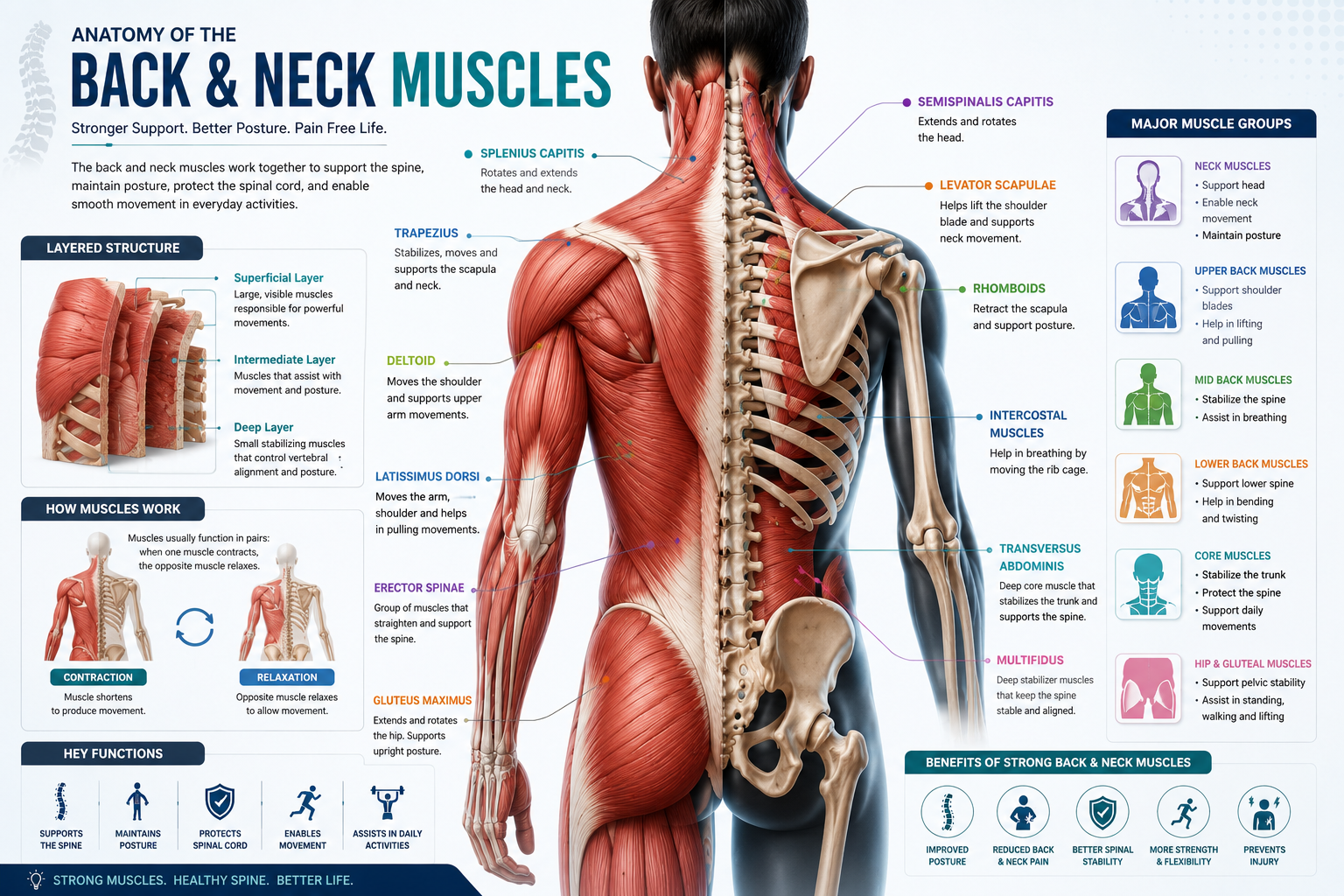
Anatomy of the Back and Neck Muscles
The back muscles are generally classified into two major functional groups:
Stabilizer Muscles
Mobilizer Muscles
1. Stabilizer Muscles
Stabilizer muscles are the deep muscles located close to the vertebrae.
These muscles:
Maintain spinal alignment
Control posture
Support the spinal joints
Provide stability during movement
Protect the spinal column from excessive strain
These muscles remain active even during simple activities like sitting or standing.
2. Mobilizer Muscles
Mobilizer muscles are the larger, more powerful muscles responsible for major body movements.
These include:
Trapezius
Latissimus Dorsi
Erector Spinae
Deltoid
Gluteus Maximus
Abdominal Muscles
Their functions include:
Bending forward
Straightening the back
Twisting the trunk
Lifting objects
Maintaining balance
Major Back and Neck Muscles
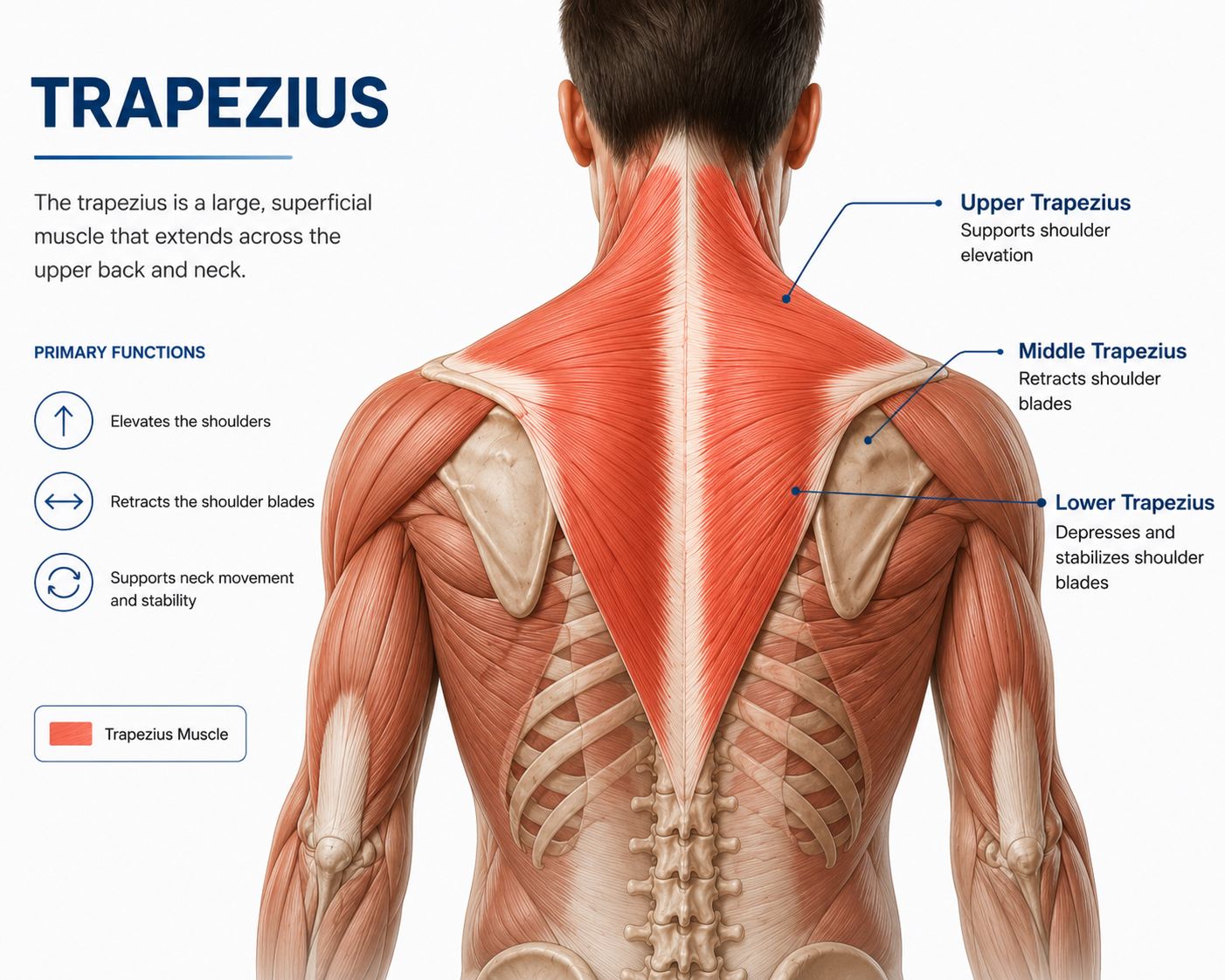
Trapezius
Supports the neck and shoulders while assisting head and shoulder movements.
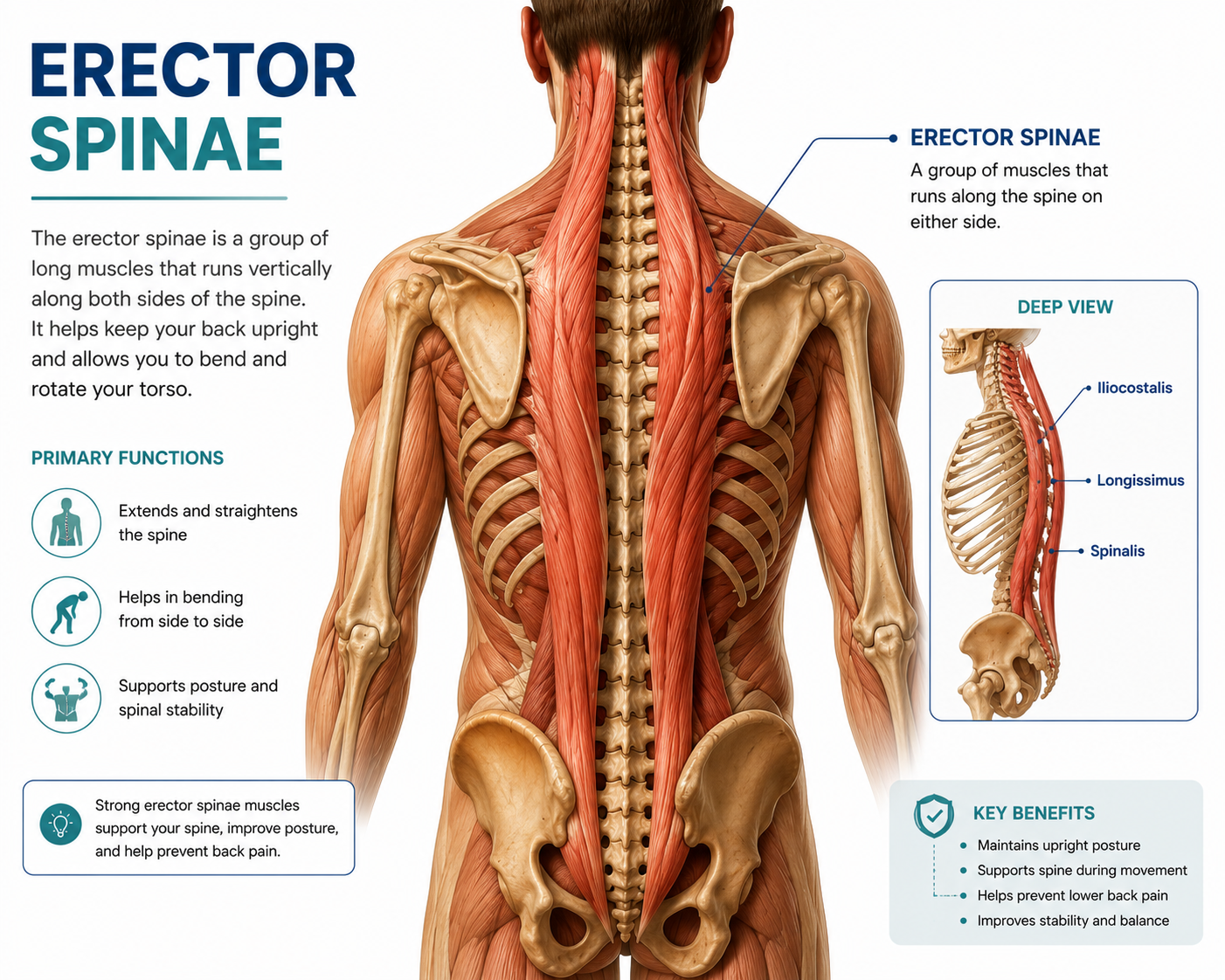
Erector Spinae
Runs along both sides of the spine and keeps the body upright while helping with bending and lifting.
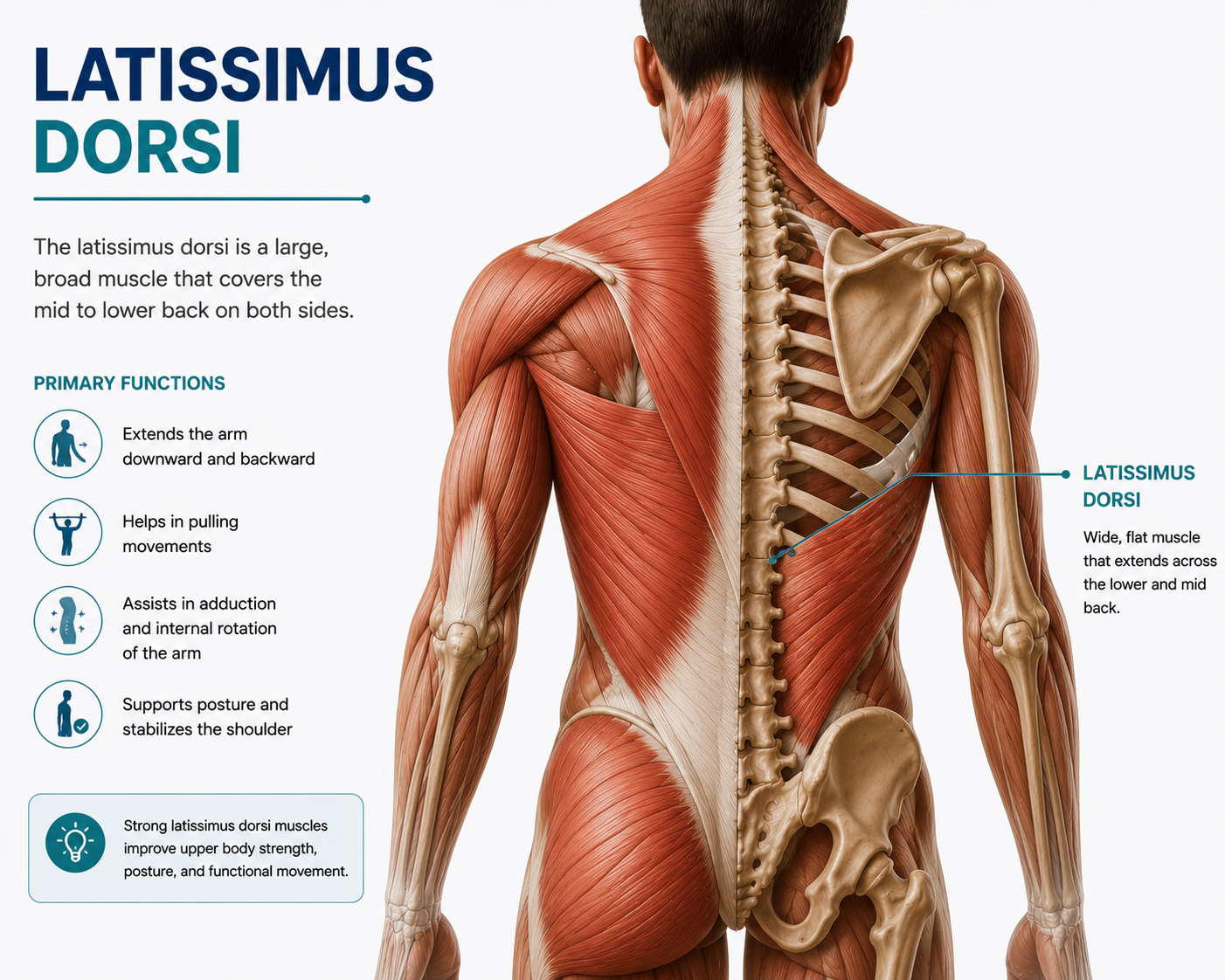
Latissimus Dorsi
The largest back muscle responsible for pulling, lifting, and shoulder movement.
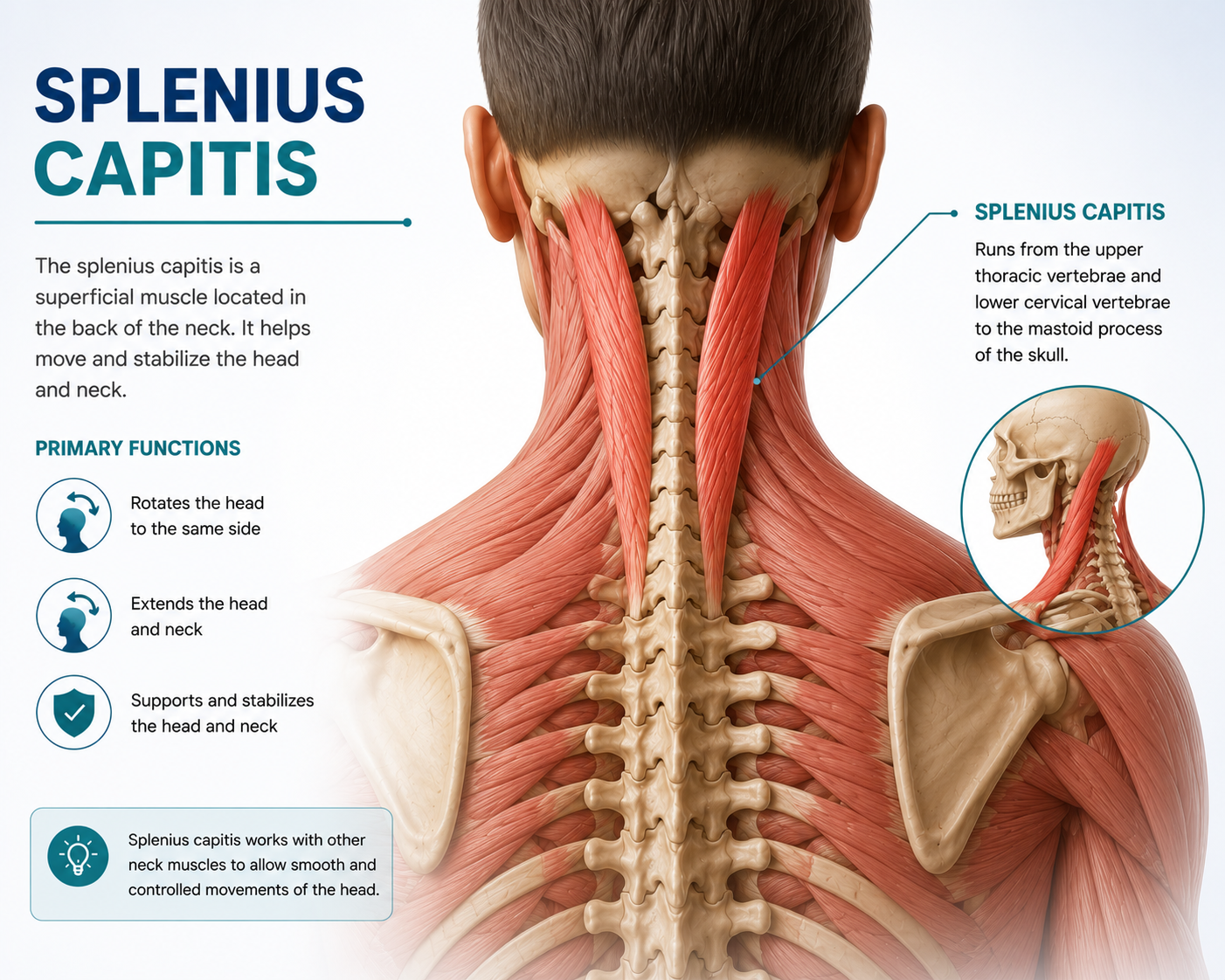
Splenius Capitis
Supports head extension and rotation while maintaining neck posture.
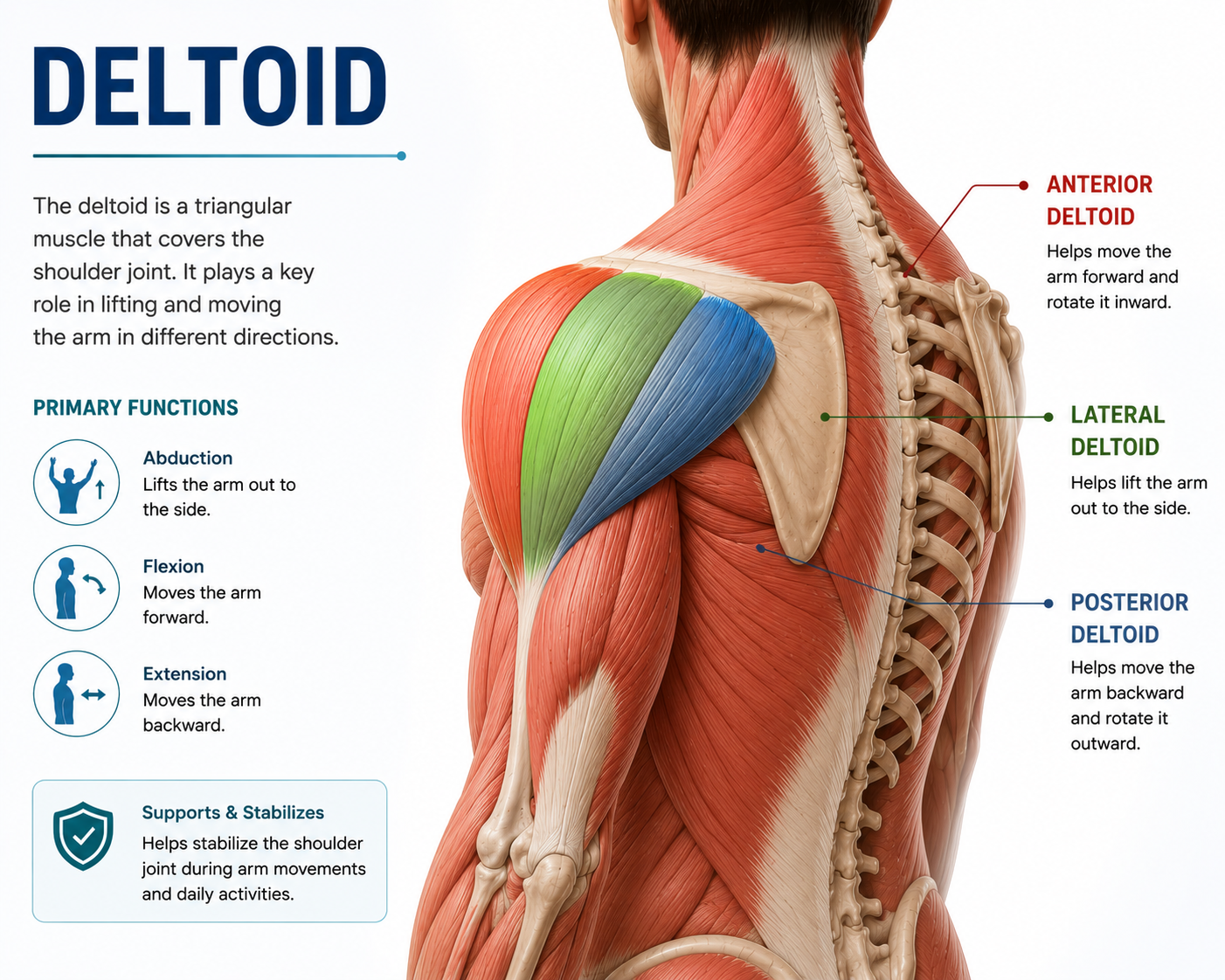
Deltoid
Controls shoulder movement and assists upper limb mobility.
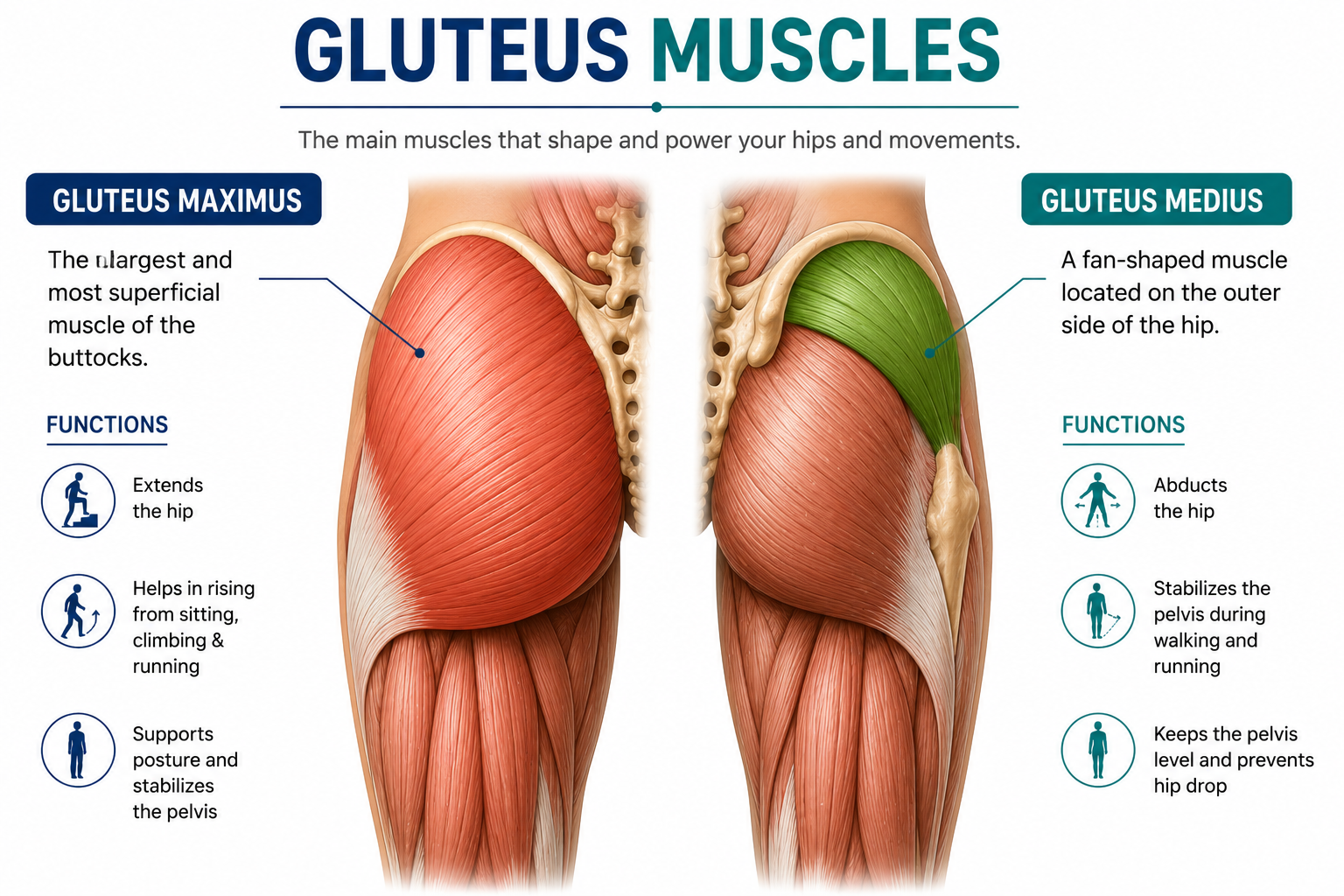
Gluteus Maximus & Medius
Provide pelvic stability and support lower back movement.
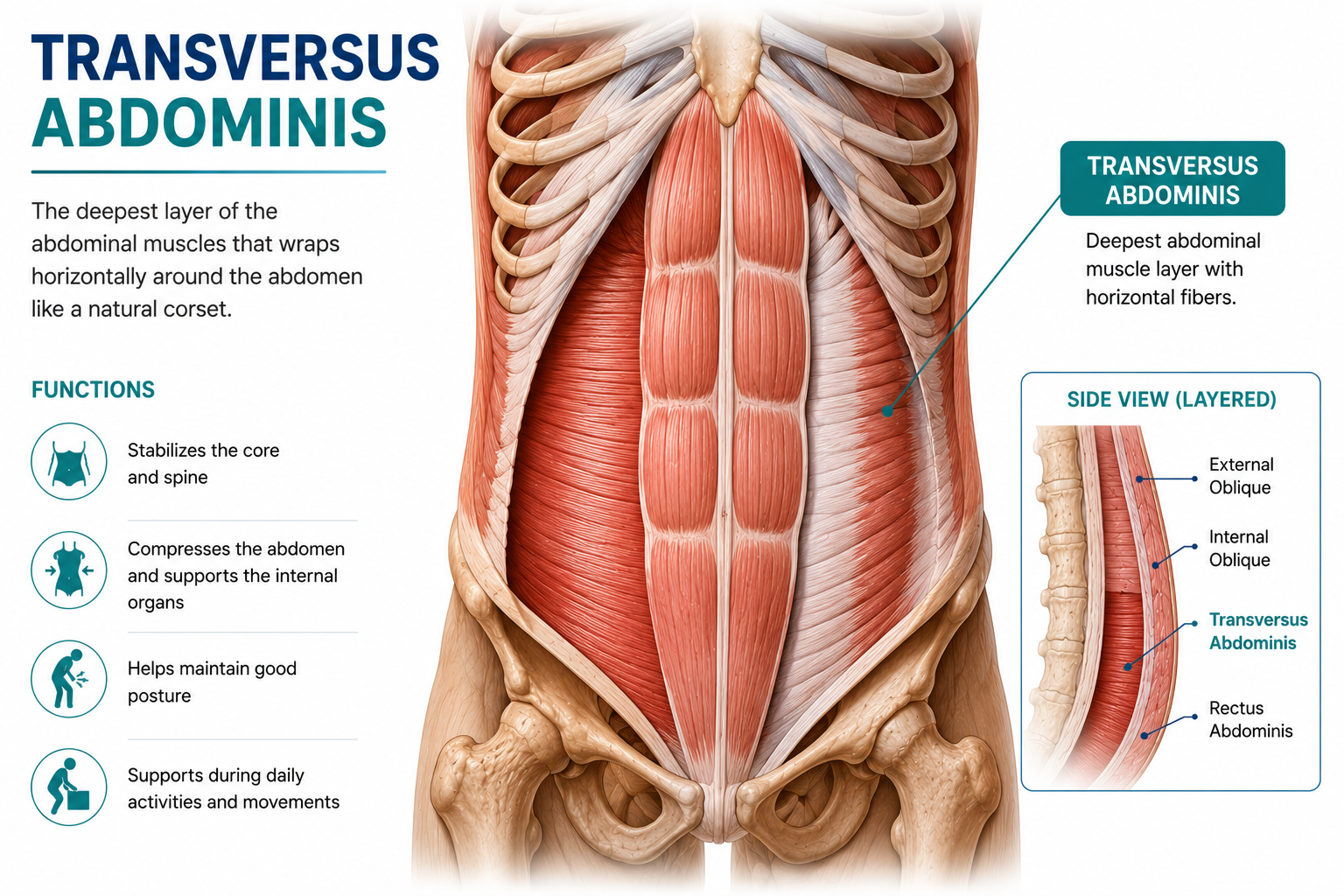
Transversus Abdominis
The deepest abdominal muscle that stabilizes the spine and increases core strength.
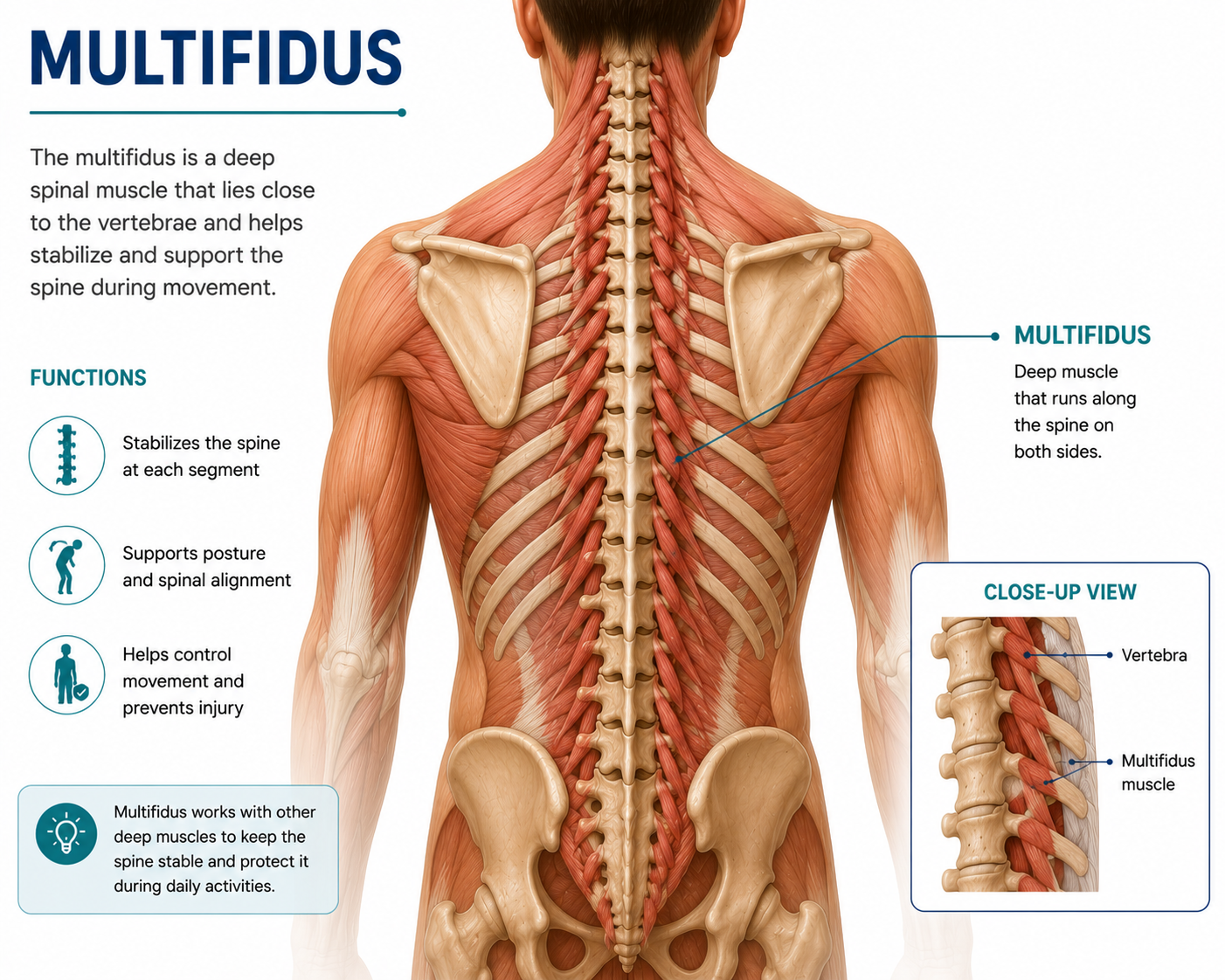
Multifidus
One of the most important stabilizing muscles that protects the vertebral joints during movement.
How Back and Neck Muscles Work Together
The muscles function as coordinated pairs.
For example:
When bending forward, the abdominal muscles contract while the back muscles lengthen.
When returning to an upright position, the erector spinae muscles contract to straighten the spine.
This balanced coordination ensures efficient movement while minimizing stress on the spinal column.
Importance of Core Muscles
The abdominal muscles work together with the back muscles to stabilize the spine.
One of the most important muscles is the Transversus Abdominis, which:
Supports the lower back
Increases spinal stability
Maintains abdominal pressure
Protects the spine during lifting
This is why weightlifters naturally tighten their core before lifting heavy weights.
Benefits of Strong Back and Neck Muscles
Strong muscles help:
Improve posture
Support the spinal column
Reduce neck pain
Prevent lower back pain
Improve balance
Increase flexibility
Enhance lifting ability
Reduce injury risk
Common Causes of Weak Back Muscles
Poor posture
Long hours of sitting
Lack of exercise
Weak core muscles
Improper lifting techniques
Sedentary lifestyle
Tips to Keep Back and Neck Muscles Healthy
Exercise regularly
Strengthen your core
Stretch daily
Maintain proper posture
Avoid prolonged sitting
Lift objects correctly
Stay physically active
Sleep on a supportive mattress
Conclusion
The back and neck muscles are essential for maintaining posture, supporting the spine, and enabling efficient movement. Understanding how stabilizer and mobilizer muscles function can help prevent pain, improve physical performance, and promote long-term spinal health. Regular strengthening and stretching exercises are key to keeping these muscles healthy and reducing the risk of injury.
Frequently Asked Questions
Common therapeutic queries answered by Curevan's medical board.
Share this Article
Help your friends, family, or colleagues discover this guide.