Structure of the Vertebrae and Intervertebral Discs Explained
What Are Vertebrae?
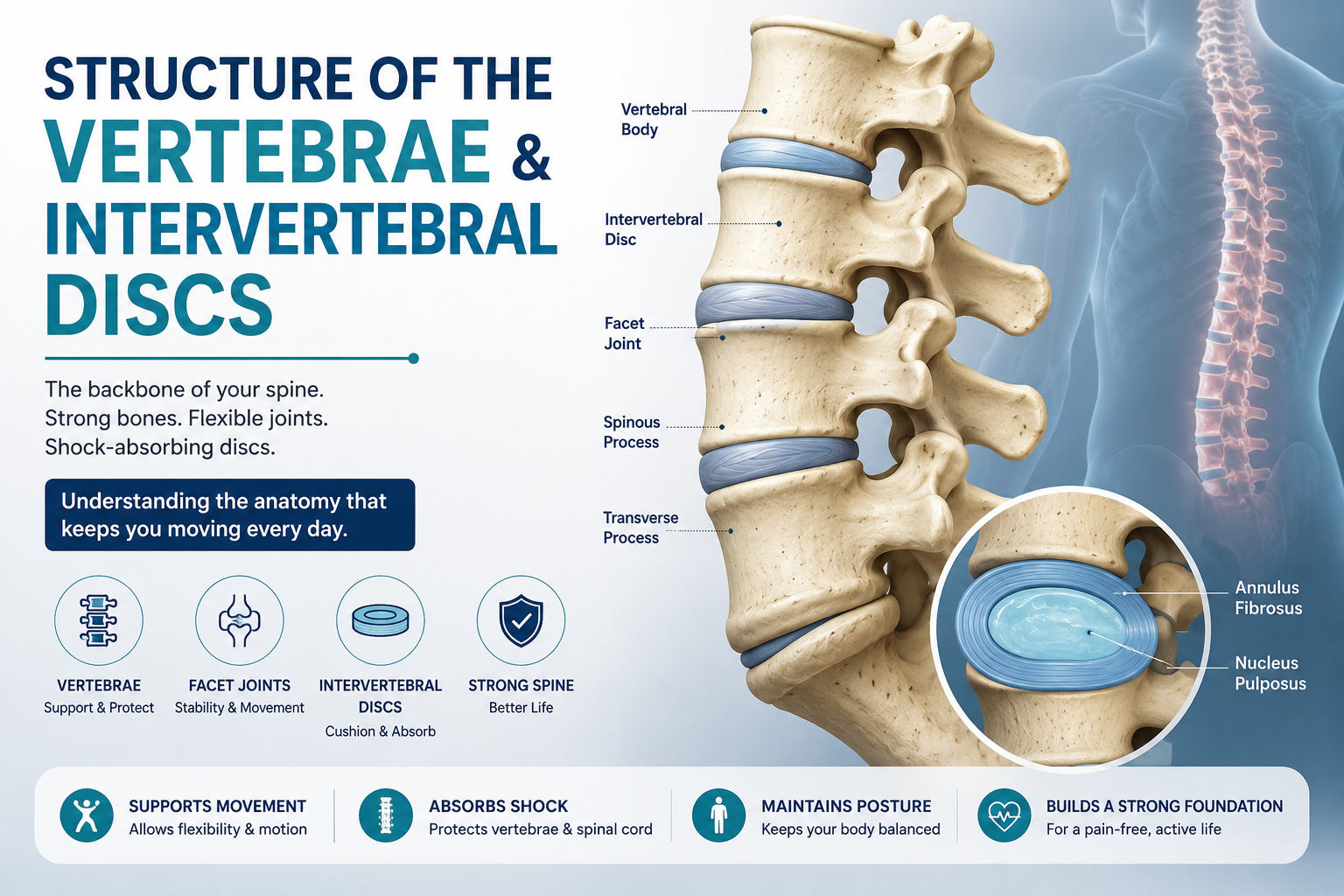
The vertebrae are the individual bones that form the spinal column. They are stacked one above another to create a protective canal for the spinal cord while allowing flexibility and movement.
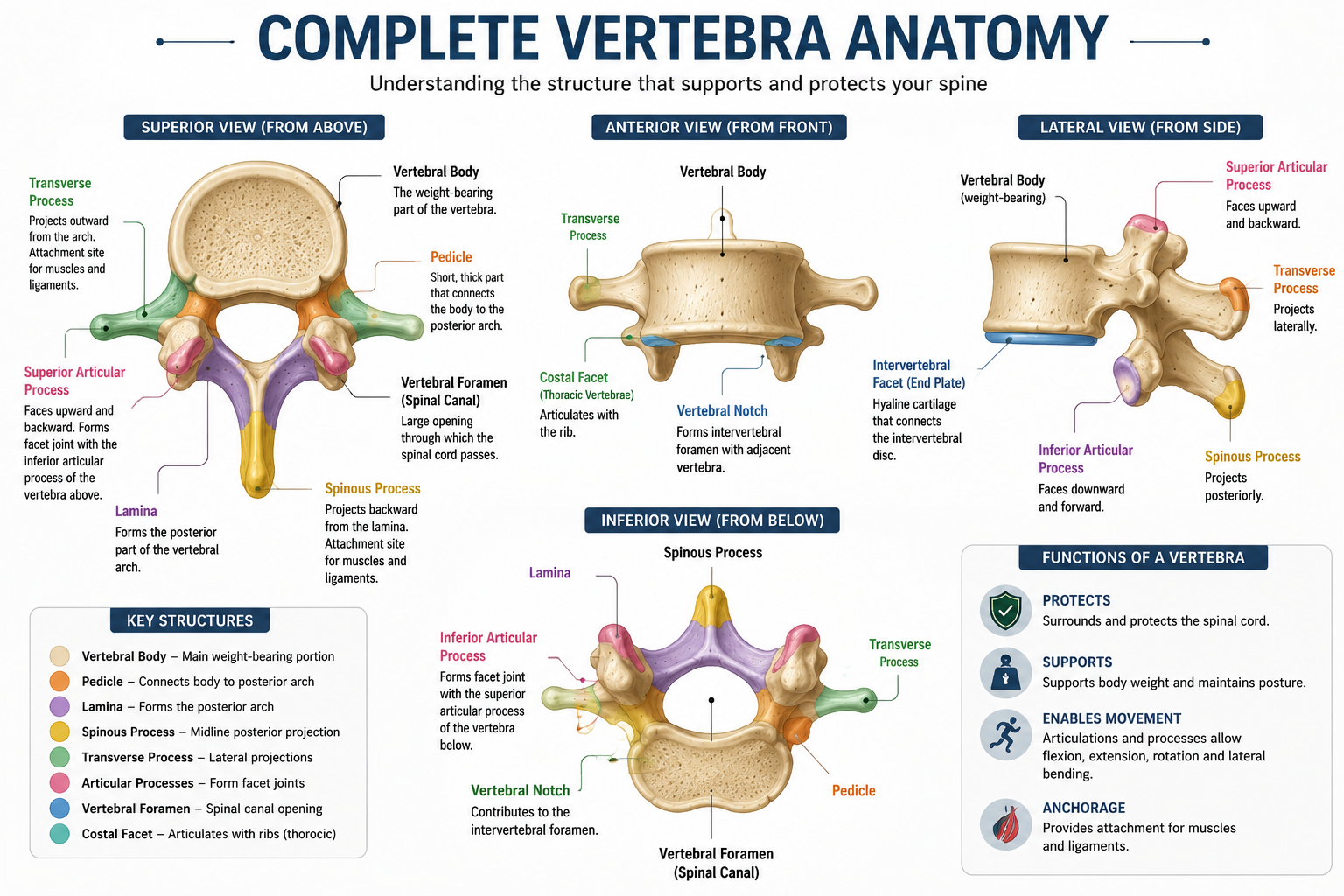
Each vertebra consists of several specialized structures that work together to provide stability and mobility.
Anatomy of a Vertebra
Key parts include:
Vertebral Body
Spinous Process
Transverse Processes
Upper Articular Process
Lower Articular Process
Vertebral (Neural) Canal
Costal Facet (Thoracic Vertebrae)
Functions of the Vertebrae
The vertebrae perform several important functions:
Protect the spinal cord
Support body weight
Maintain spinal alignment
Provide attachment points for muscles and ligaments
Allow bending, twisting, and rotation
Maintain spinal stability
Spinous and Transverse Processes
These bony projections serve as attachment points for muscles and ligaments.
Their functions include:
Muscle attachment
Ligament support
Spinal movement
Postural stability
Facet Joints
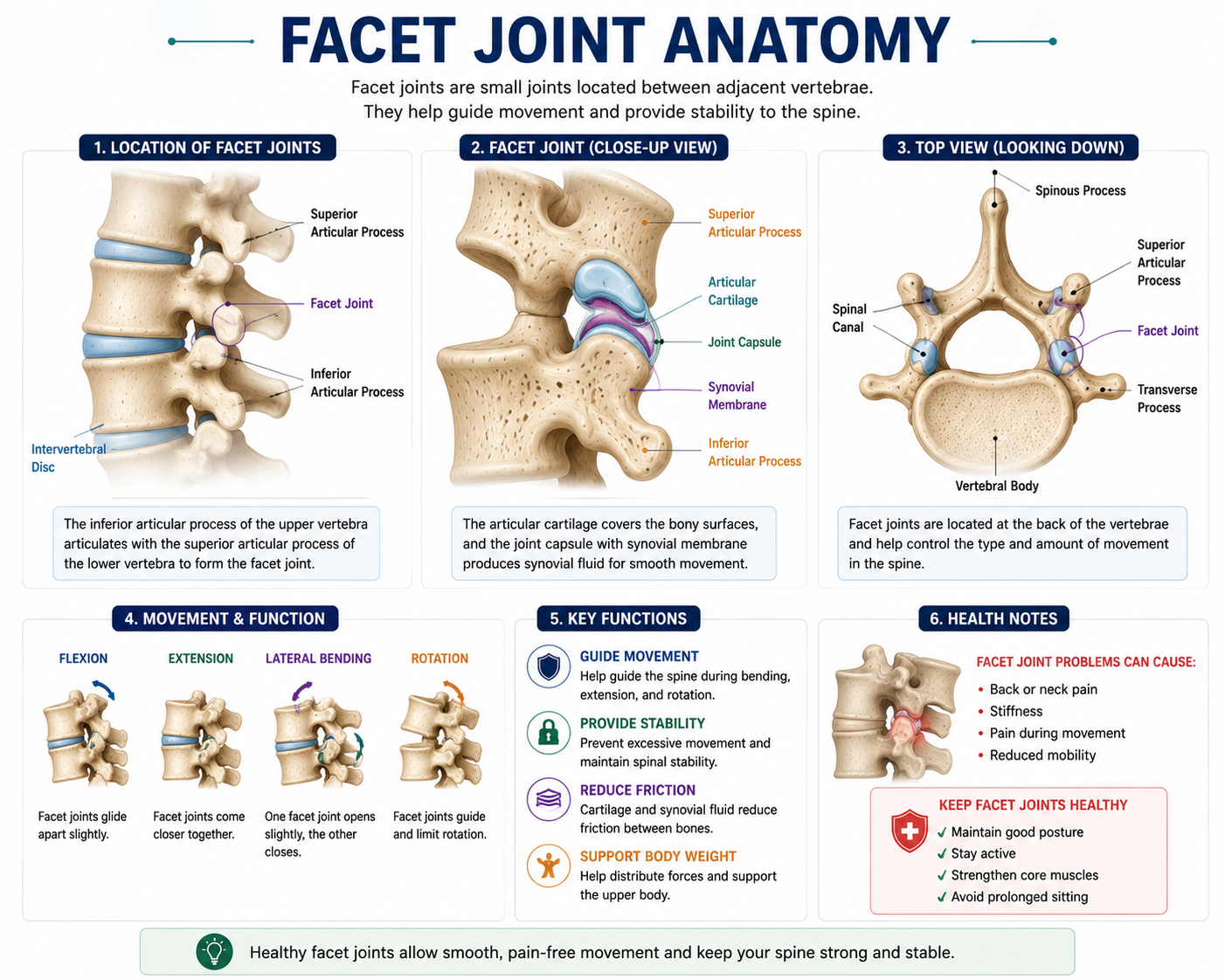
Facet joints are small joints located between adjacent vertebrae.
They help:
Guide spinal movement
Prevent excessive motion
Improve spinal stability
Reduce friction between vertebrae
Healthy facet joints allow smooth bending, extension, and rotation.
What Are Intervertebral Discs?
Between every two vertebrae lies an intervertebral disc, a strong fibrocartilaginous structure that acts as a cushion.
The discs:
Separate adjacent vertebrae
Absorb shocks
Allow flexibility
Distribute pressure evenly throughout the spine
Structure of an Intervertebral Disc
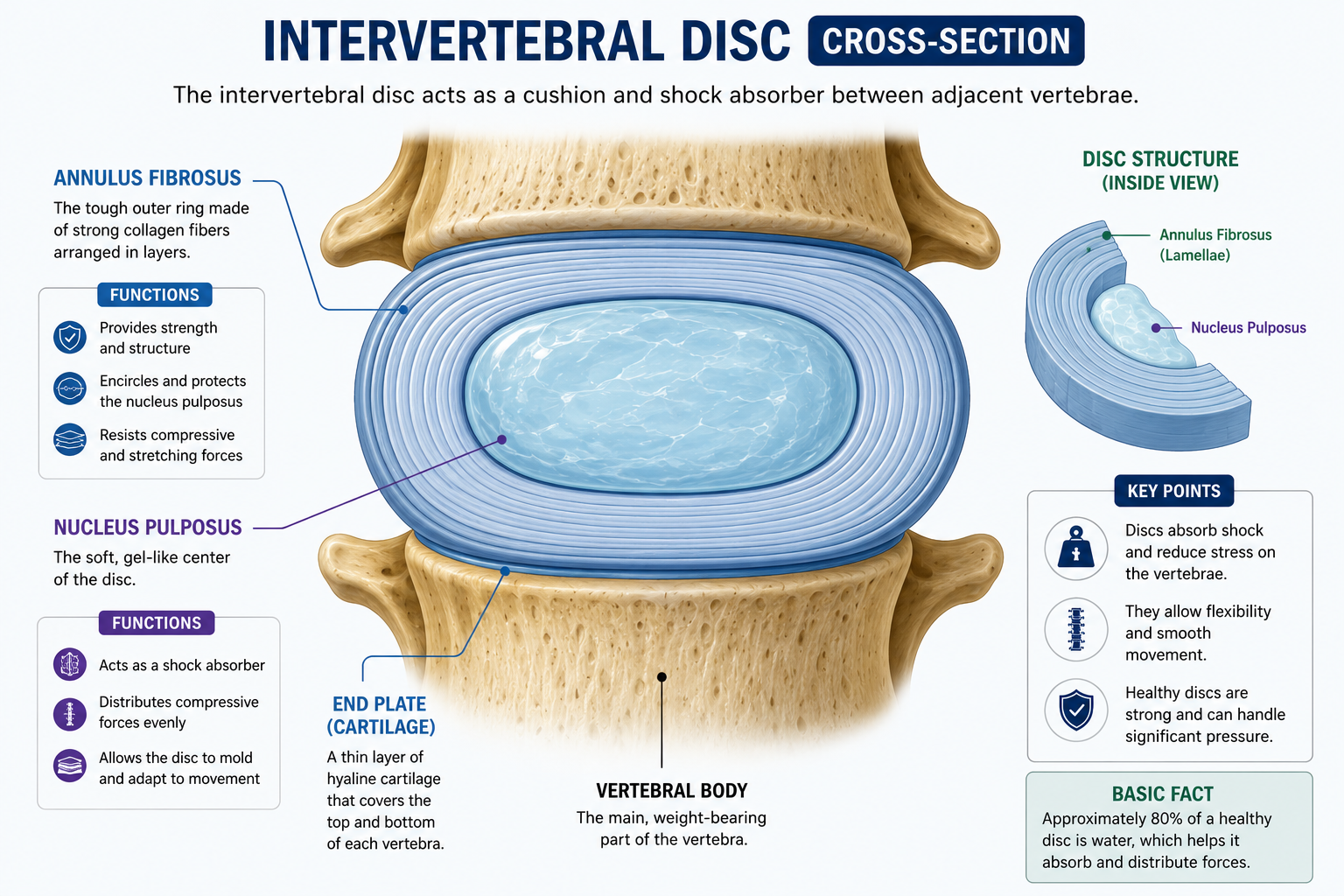
Each disc contains two major components.
1. Annulus Fibrosus
The tough outer ring made of strong collagen fibers.
Functions:
Provides strength
Maintains disc shape
Prevents the inner material from bulging
2. Nucleus Pulposus
The soft gel-like center.
Functions:
Absorbs shock
Distributes body weight
Allows smooth spinal movement
How Do Intervertebral Discs Work?
Healthy discs behave like natural shock absorbers.
They help:
Absorb impact while walking
Reduce pressure during lifting
Allow bending and twisting
Protect the vertebrae from excessive force
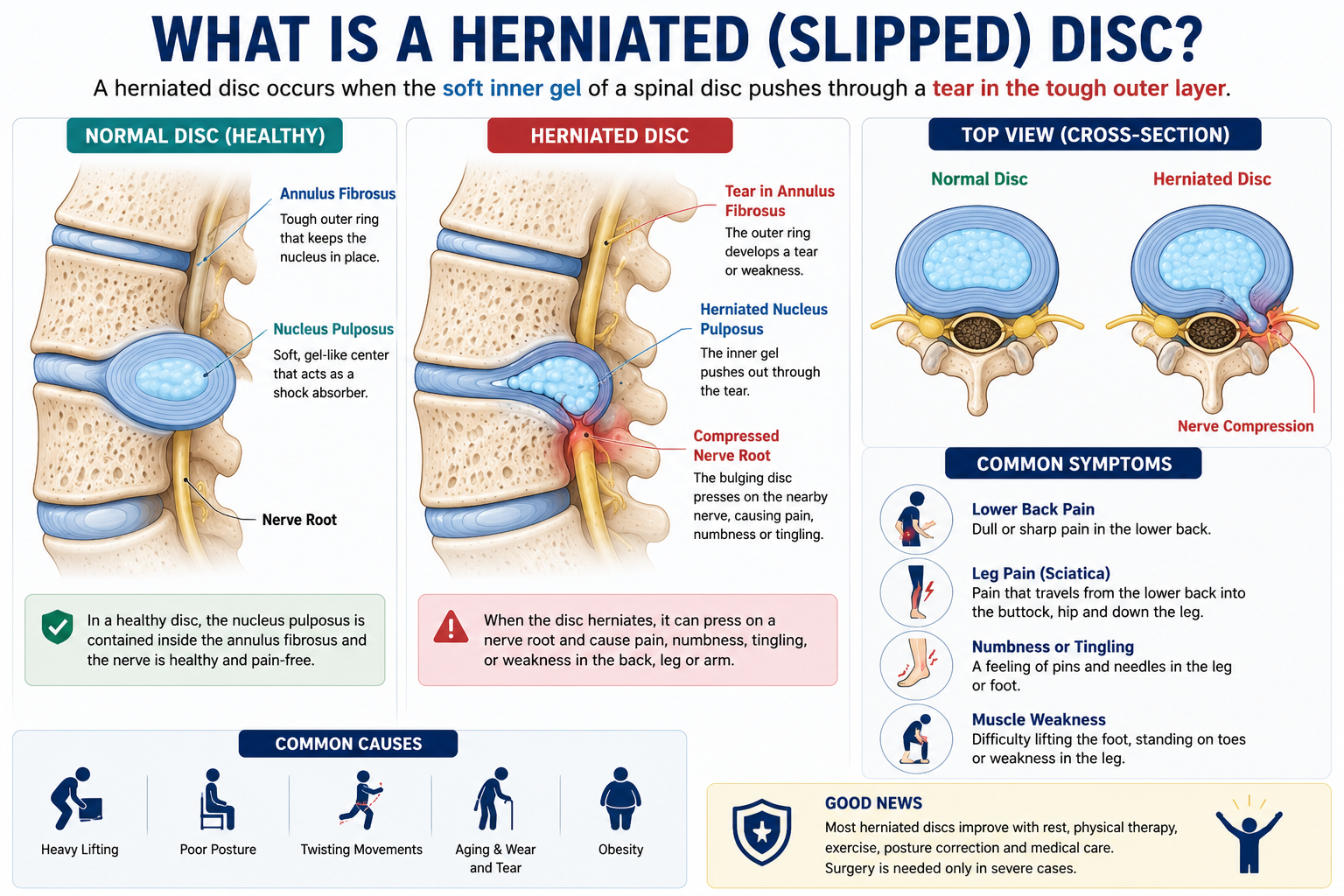
What Is a Herniated (Slipped) Disc?
Despite the common term "slipped disc," the disc does not actually slip.
Instead, the outer layer (annulus fibrosus) develops a tear, allowing the inner nucleus pulposus to bulge outward.
This condition is known as a:
Herniated Disc
Ruptured Disc
Prolapsed Disc
If the bulging disc compresses a nearby spinal nerve, it may cause:
Lower back pain
Neck pain
Leg pain (Sciatica)
Numbness
Tingling
Muscle weakness
Common Causes of Disc Injury
Poor posture
Heavy lifting
Repetitive twisting
Aging
Obesity
Weak core muscles
Sudden trauma
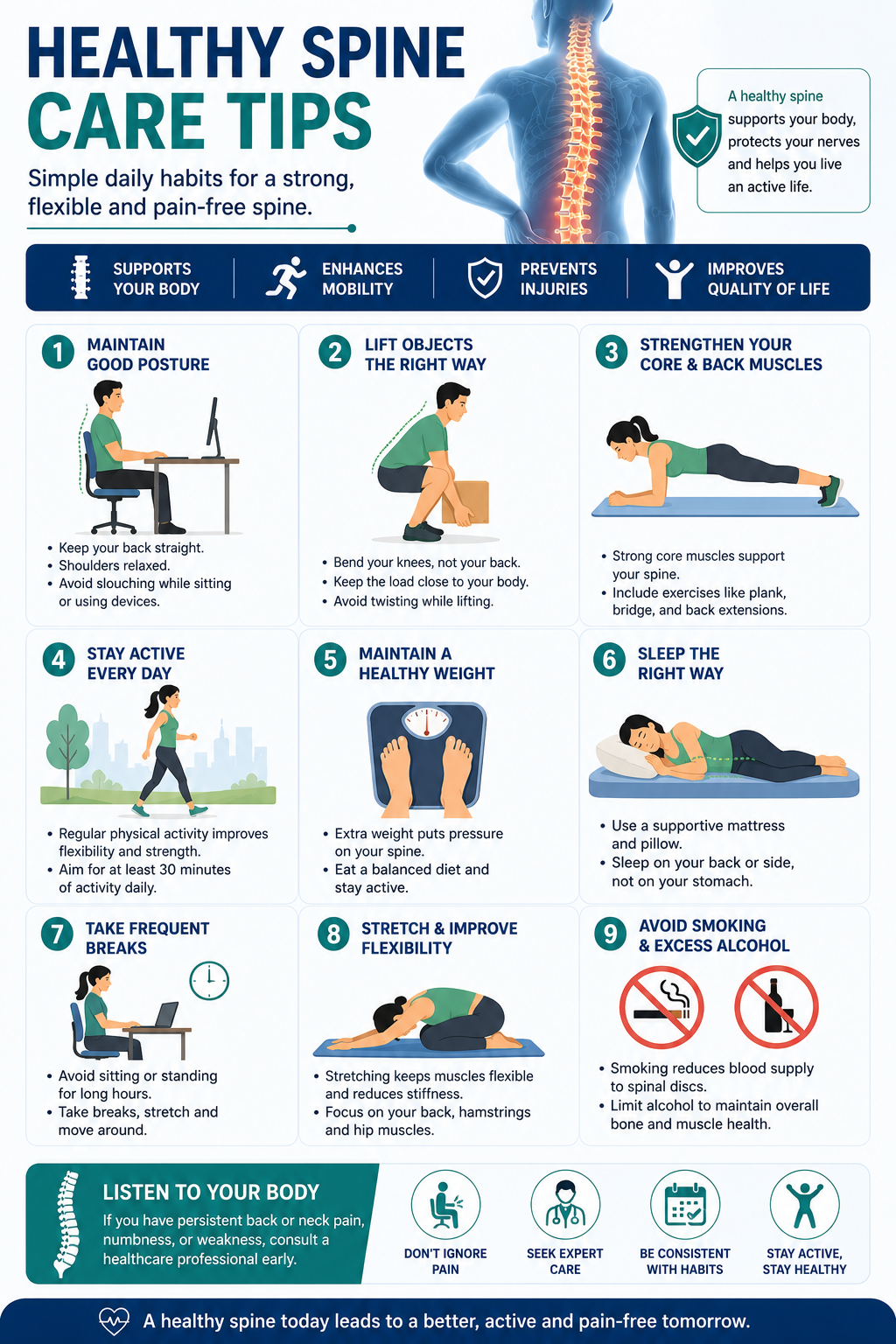
Tips to Keep Your Spine Healthy
Maintain proper posture
Lift objects correctly
Exercise regularly
Strengthen your core
Stretch daily
Avoid prolonged sitting
Maintain a healthy weight
Stay physically active
Conclusion
The vertebrae and intervertebral discs work together to create a strong, flexible, and protective spinal column. Understanding their anatomy and function can help prevent injuries, improve posture, and maintain long-term spinal health. Regular exercise, good posture, and proper lifting techniques are essential for keeping the spine healthy throughout life.
Frequently Asked Questions
Common therapeutic queries answered by Curevan's medical board.
Share this Article
Help your friends, family, or colleagues discover this guide.