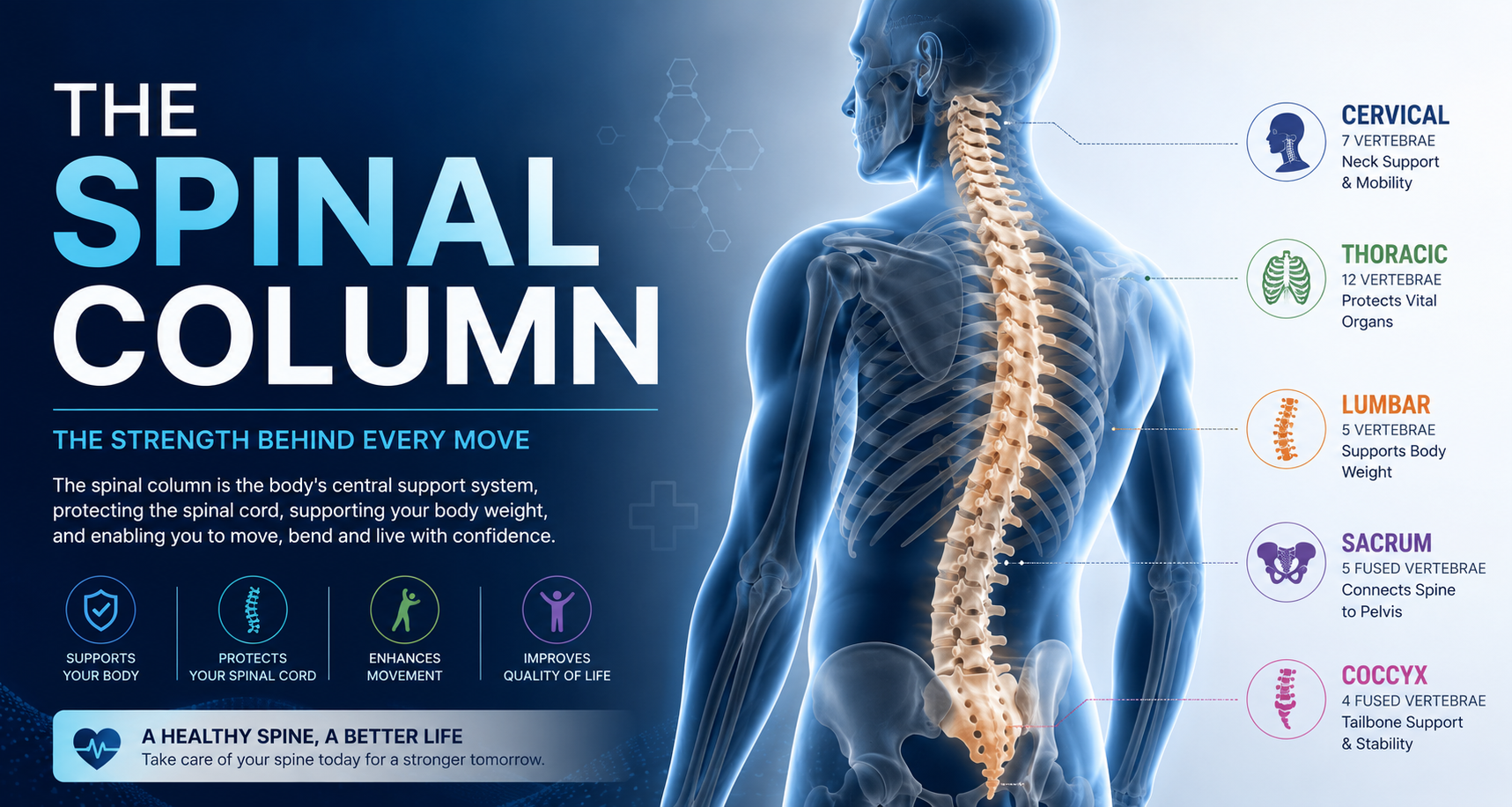
The Spinal Column: Spine Anatomy, Vertebrae & Functions Explained
What Is the Spine?
The spine is the body's primary support structure. It provides stability while allowing flexibility for bending, twisting, and movement. In addition to supporting body weight, it also protects the spinal cord—a vital part of the nervous system that carries messages between the brain and the rest of the body.
The Spinal Column
The spinal column consists of 33–34 vertebrae, arranged in five different regions.
These include:
7 Cervical Vertebrae (Neck)
12 Thoracic Vertebrae (Upper Back)
5 Lumbar Vertebrae (Lower Back)
5 Sacral Vertebrae (Fused)
4 Coccygeal Vertebrae (Tailbone)
The upper 24 vertebrae are movable and provide flexibility, while the sacral and coccygeal vertebrae are fused to provide stability.
1. Cervical Spine (C1–C7)


The cervical spine consists of seven vertebrae located in the neck.
Functions
Supports the weight of the head
Allows neck movement
Protects the upper spinal cord
Enables head rotation and bending
2. Thoracic Spine (T1–T12)


The thoracic spine contains twelve vertebrae connected to the ribs, forming the rib cage.
Functions
Protects the heart and lungs
Supports the upper body
Provides stability
Allows controlled rotation
3. Lumbar Spine (L1–L5)


The lumbar spine contains five large vertebrae responsible for carrying most of the body's weight.
Functions
Supports body weight
Allows bending and lifting
Absorbs shock
Maintains balance
4. Sacrum


The sacrum is formed by five fused vertebrae and connects the spine to the pelvis.
Functions
Transfers body weight to the pelvis
Stabilizes the spine
Supports standing and walking
5. Coccyx (Tailbone)


The coccyx consists of three to five fused vertebrae and serves as an attachment point for muscles and ligaments.
Functions
Supports sitting posture
Provides muscle attachment
Assists pelvic floor stability
Why Is a Healthy Spine Important?
A healthy spine helps:
Maintain good posture
Improve flexibility
Reduce back pain
Protect the spinal cord
Enhance balance and mobility
Support everyday activities
Common Spine Problems
Neck Pain
Upper Back Pain
Lower Back Pain
Herniated Disc
Sciatica
Scoliosis
Degenerative Disc Disease
Osteoporosis
Tips to Maintain a Healthy Spine
Maintain proper posture
Exercise regularly
Strengthen your core muscles
Lift objects correctly
Avoid prolonged sitting
Maintain a healthy weight
Sleep on a supportive mattress
Conclusion
The spinal column is the foundation of the human body, providing strength, flexibility, and protection to the spinal cord. Understanding the different regions of the spine and maintaining good spinal health can significantly reduce the risk of pain and improve overall quality of life.
Frequently Asked Questions
Common therapeutic queries answered by Curevan's medical board.
Share this Article
Help your friends, family, or colleagues discover this guide.