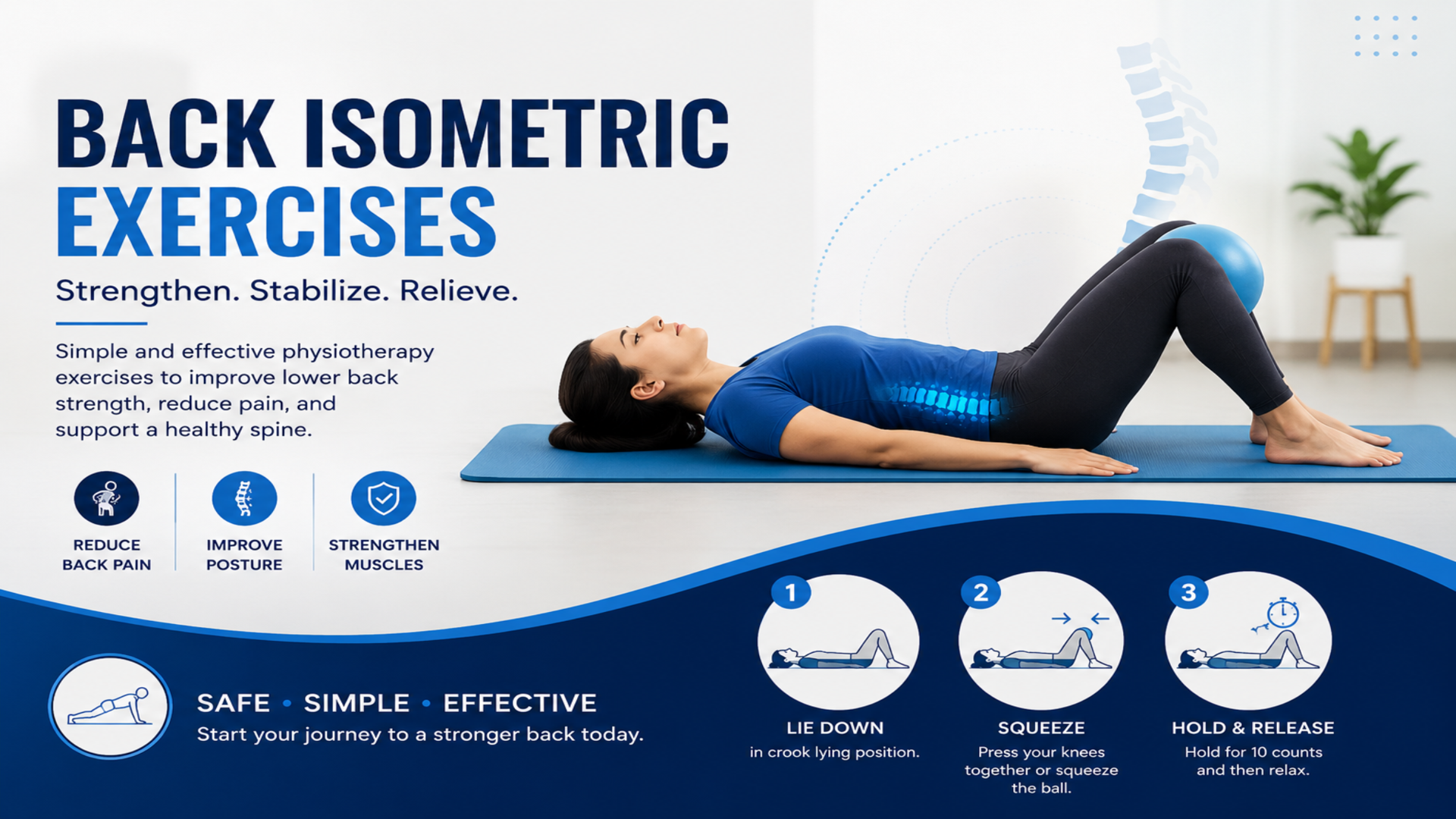
Back Isometric Exercises for Lower Back Pain Relief & Strength
What Are Back Isometric Exercises?
Back isometric exercises are effective physiotherapy techniques designed to strengthen lower back muscles, improve posture, and enhance spinal stability without causing movement in the surrounding joints.
These exercises involve applying controlled tension to specific back muscles. By maintaining constant contraction, they help improve muscular endurance while supporting better posture and stability.
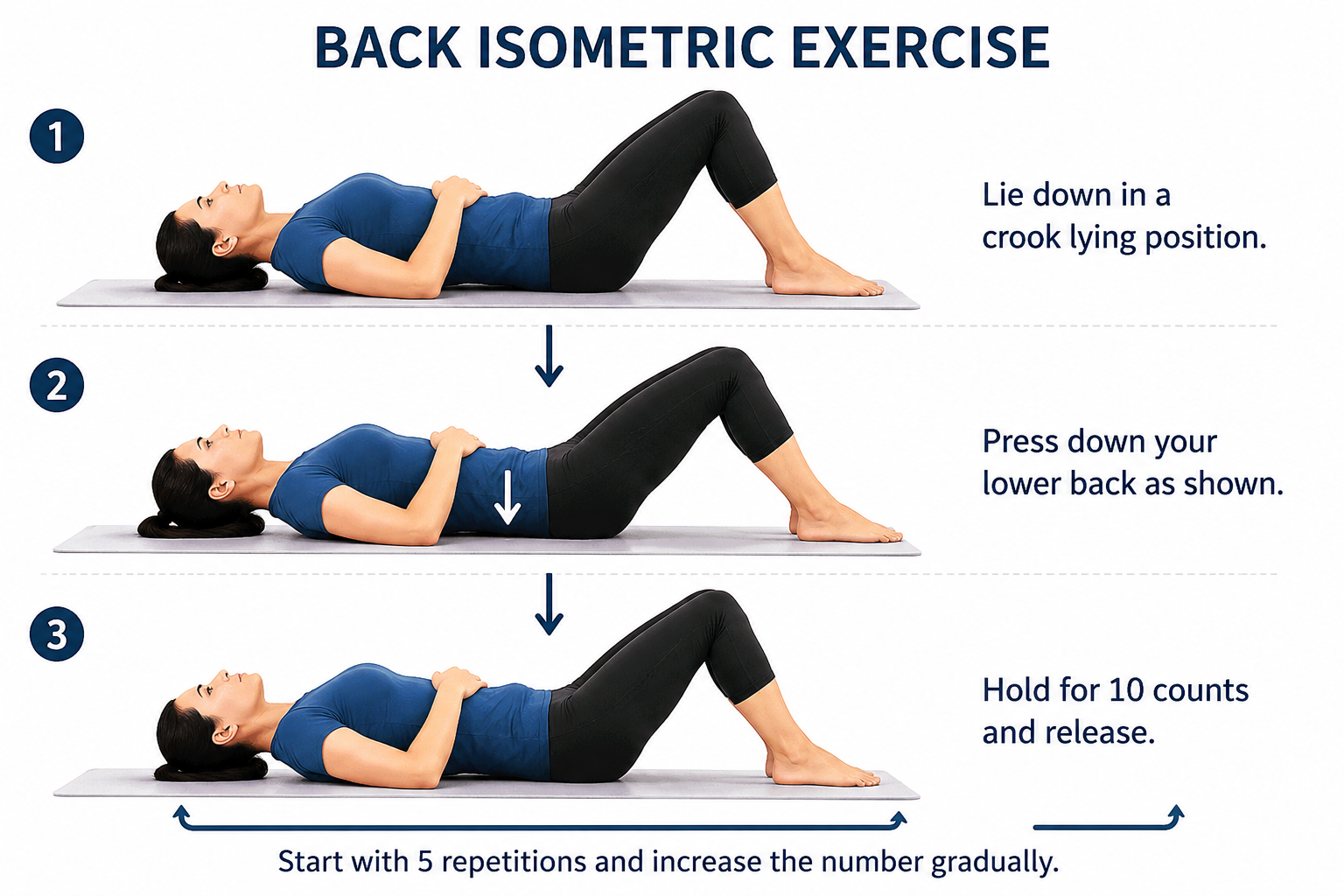
How to Perform Back Isometric Exercise
Lie down in a crook lying position.
Gently press your lower back downward as demonstrated.
Hold the position for a count of 10, then relax.
Begin with 5 repetitions and gradually increase the number over time.
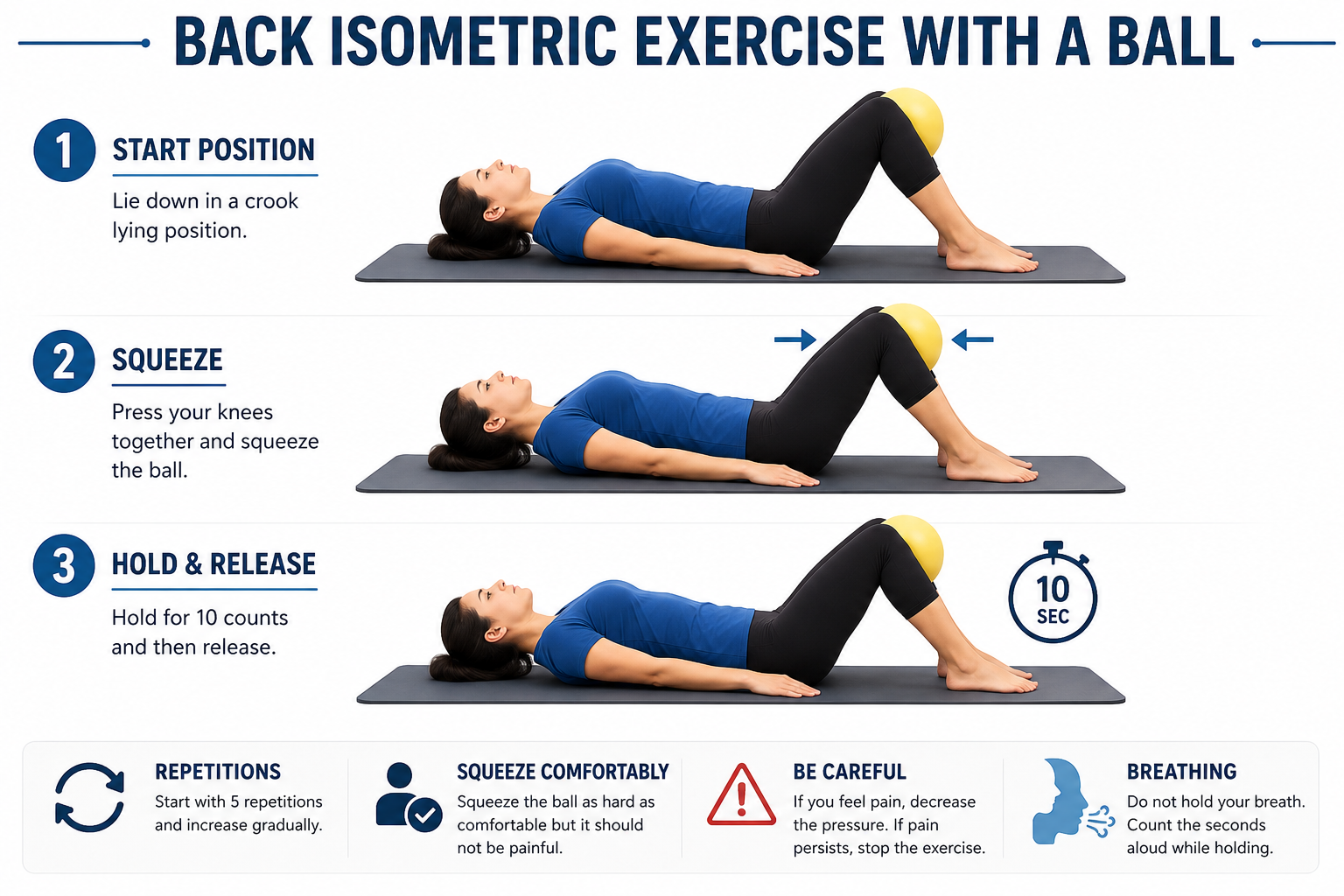
Back Isometric Exercise with a Ball
How to Perform
Lie down in a crook lying position.
Press your knees together or place a ball between them as shown.
Hold the position for 10 counts, then release.
Start with 5 repetitions and gradually increase.
Squeeze the ball firmly but ensure it remains comfortable and not painful.
If you experience discomfort, reduce the pressure. If the pain persists, discontinue the exercise.
Benefits of Back Isometric Exercises
Back isometric exercises are commonly recommended by physiotherapists for managing lower back pain and improving core stability. These exercises help:
Strengthen lower back muscles
Improve posture and alignment
Enhance spinal stability
Increase muscle endurance
Support recovery from back pain
Important Safety Instructions
Do not hold your breath while performing isometric exercises.
Count the holding seconds aloud to maintain proper breathing.
Avoid excessive pressure that causes pain.
Stop the exercise if discomfort continues.
FAQs
1. What are back isometric exercises?
Back isometric exercises involve contracting back muscles without moving the joints, helping improve strength, endurance, and stability.
2. What are the benefits of back isometric exercises?
They help strengthen back muscles, improve posture, increase endurance, and support recovery from lower back pain.
3. How many repetitions should I start with?
You should begin with 5 repetitions and gradually increase the number as your strength improves.
4. How long should I hold the position?
Each position should be held for about 10 counts before relaxing.
5. Can I use a ball during the exercise?
Yes, placing a ball between the knees and gently squeezing it can enhance the effectiveness of the exercise.
6. What should I do if I feel pain?
Reduce the pressure if you feel discomfort. If pain continues, stop the exercise.
7. Should I hold my breath during the exercise?
No, you should breathe normally. Counting aloud helps maintain proper breathing.
Share this Article
Help your friends, family, or colleagues discover this guide.