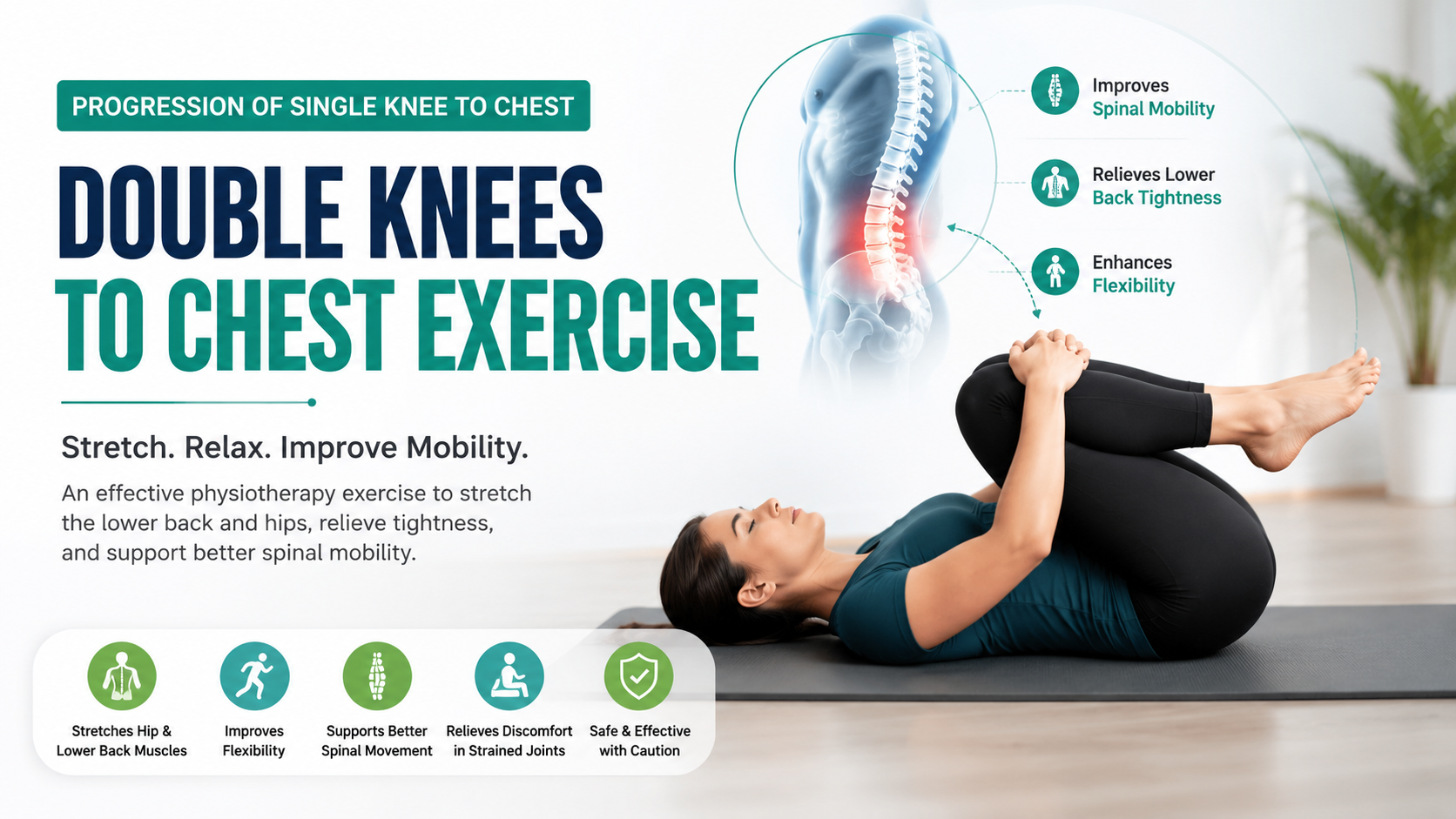
Double Knees to Chest Exercise for Lower Back Flexibility & Pain Relief
What is the Double Knees to Chest Exercise?
The Double Knees to Chest exercise is a progression of the Single Knee to Chest exercise commonly used in physiotherapy. This exercise helps relieve discomfort caused by strained facet joints and tight lower back muscles.
It is also beneficial for stretching the hip and lower back muscles, improving flexibility, and enhancing mobility.
However, individuals with disc protrusion-related pain should perform this exercise carefully and under professional guidance.
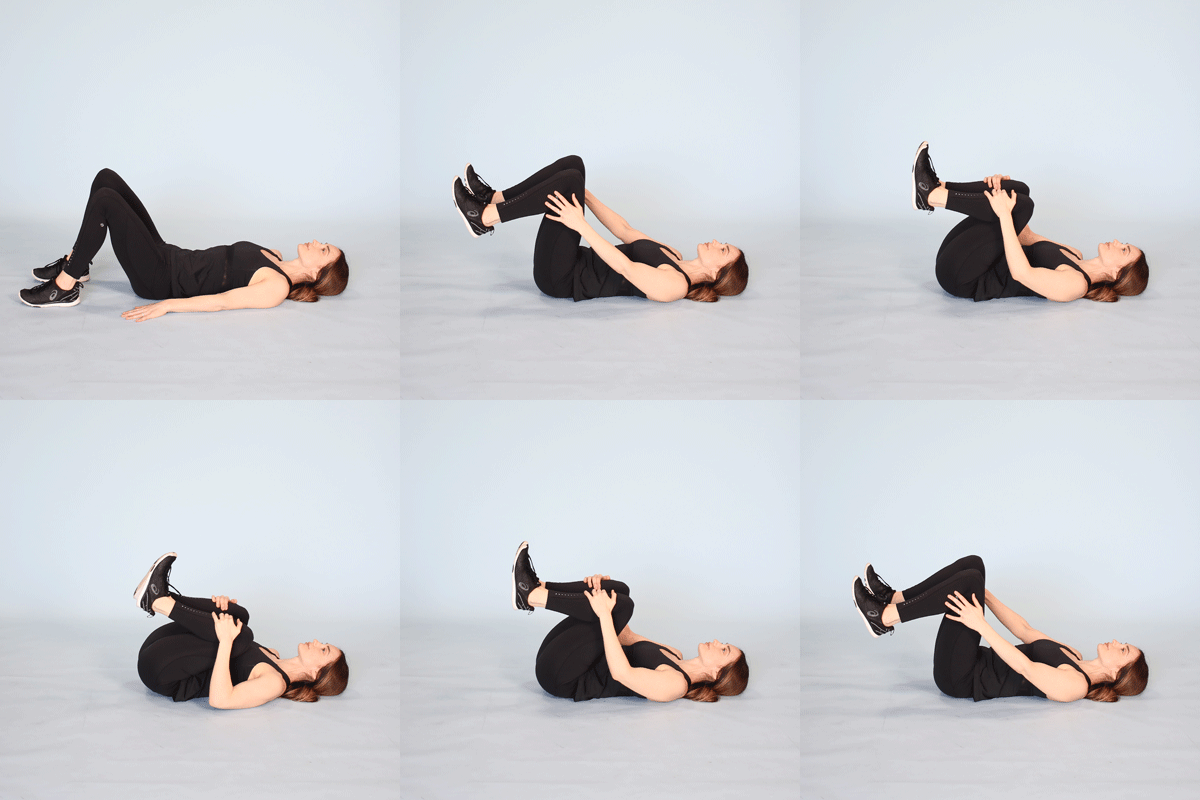
Correct Way to Perform Double Knees to Chest Exercise
Begin by lying comfortably on your back.
Slowly lift both legs and bend your knees toward your chest.
Gently hug your knees close to your chest while taking a comfortable breath.
Relax and slowly return your feet to the floor while breathing out.
Start with 5 repetitions and gradually increase the number over time.
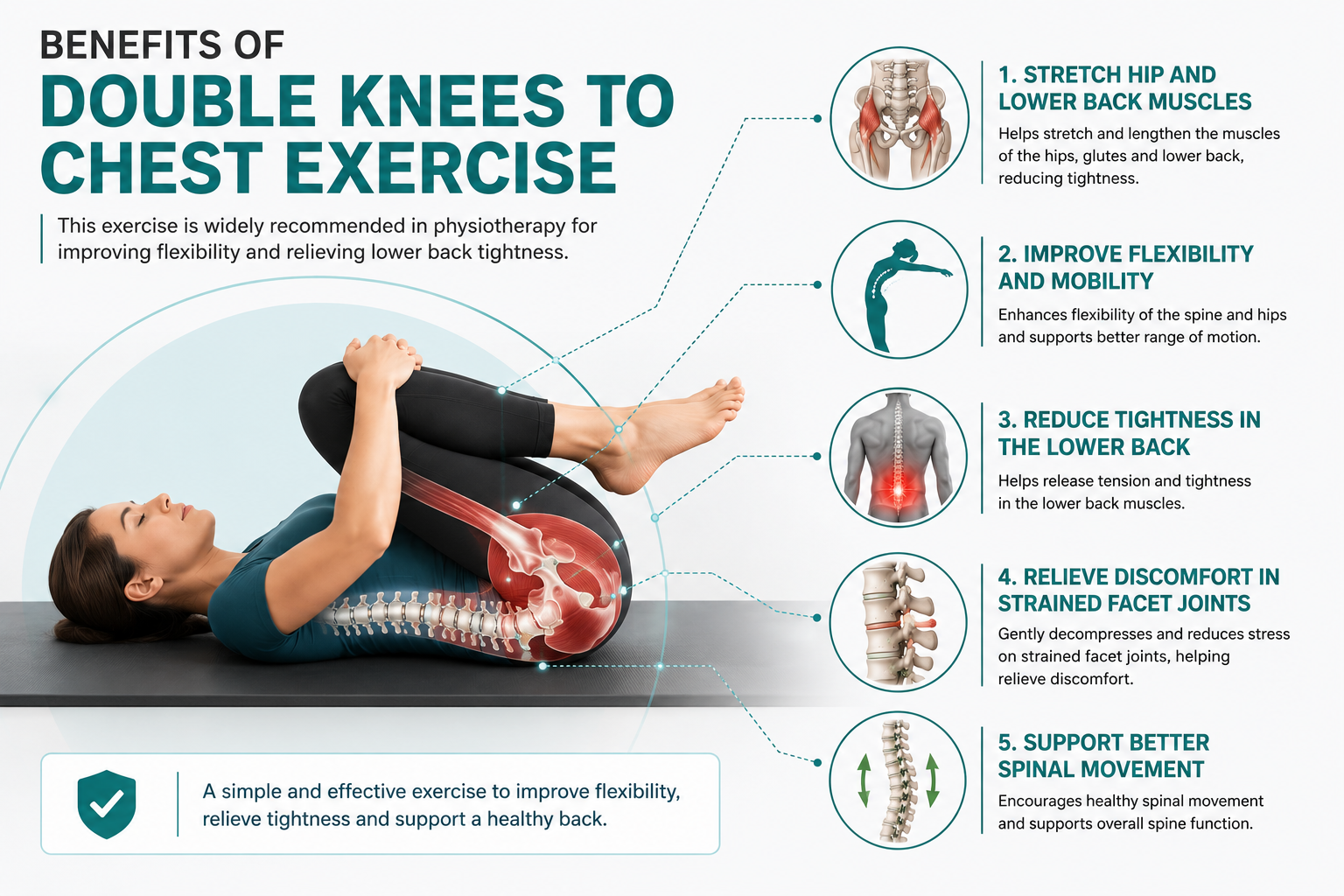
Benefits of Double Knees to Chest Exercise
This exercise is widely recommended in physiotherapy for improving flexibility and relieving lower back tightness. It helps:
Stretch hip and lower back muscles
Improve flexibility and mobility
Reduce tightness in the lower back
Relieve discomfort in strained facet joints
Support better spinal movement
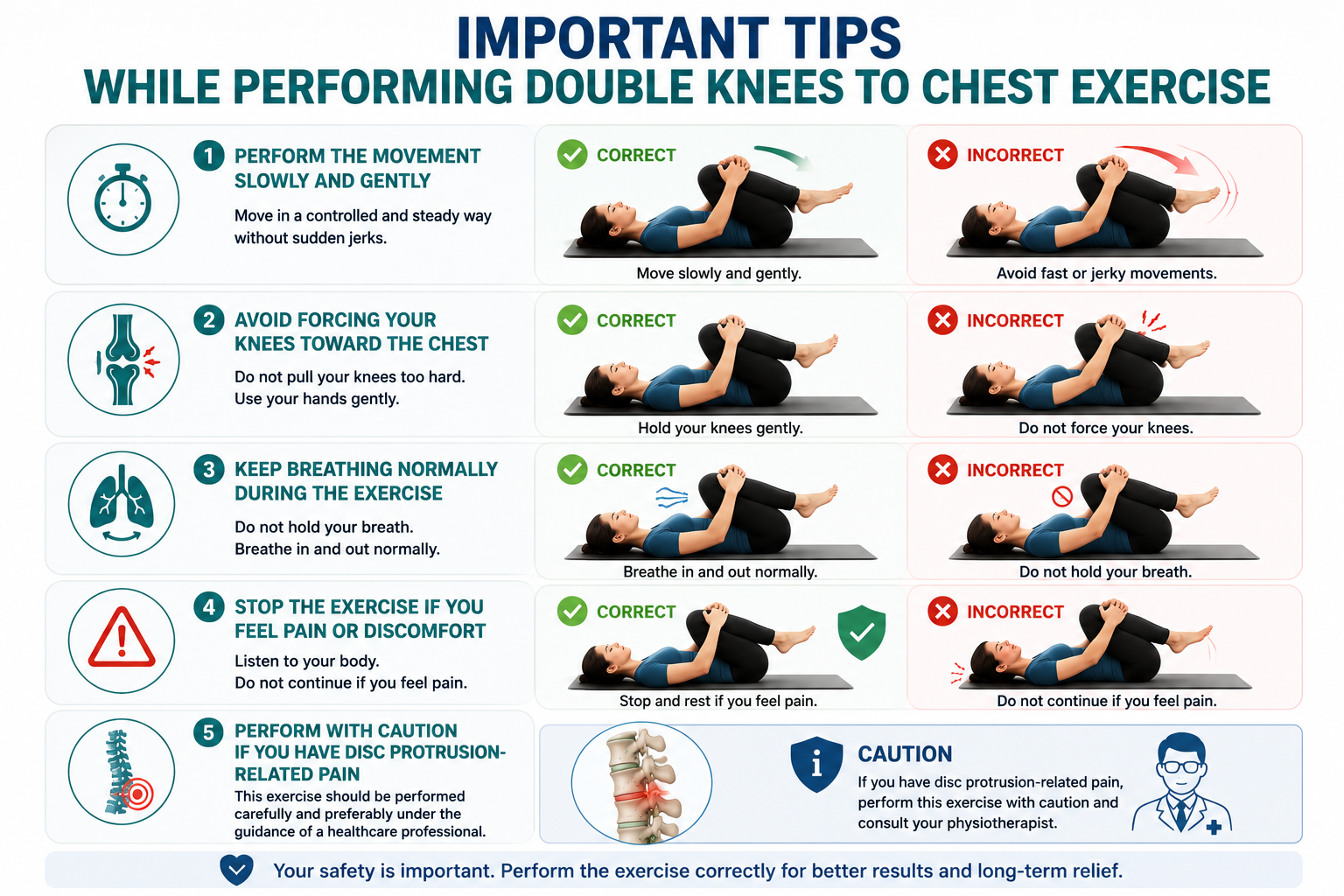
Important Tips While Performing This Exercise
Perform the movement slowly and gently
Avoid forcing your knees toward the chest
Keep breathing normally during the exercise
Stop the exercise if you feel pain or discomfort
Perform with caution if you have disc protrusion-related pain
हिंदी में निर्देश (Hindi Instructions)
पीठ के बल लेटकर शुरुआत करें।
धीरे-धीरे दोनों पैरों को उठाएं और घुटनों को मोड़कर छाती की ओर लाएं।
सांस लेते हुए घुटनों को छाती से लगाएं।
सांस छोड़ते हुए पैरों को धीरे-धीरे वापस फर्श पर लाएं।
5 पुनरावृत्ति से शुरुआत करें और धीरे-धीरे संख्या बढ़ाएं।
FAQs1. What is the Double Knees to Chest exercise?
It is a physiotherapy stretching exercise that helps improve flexibility and relieve lower back tightness.
2. What are the benefits of this exercise?
It helps stretch hip and lower back muscles, improve mobility, and reduce discomfort in the lower back.
3. How many repetitions should I start with?
You should begin with 5 repetitions and gradually increase the number over time.
4. Can this exercise help lower back pain?
Yes, it may help reduce lower back tightness and improve spinal movement.
5. Should I perform this exercise if I have disc protrusion?
This exercise should be performed carefully and preferably under professional guidance if your pain is related to disc protrusion.
6. How should I breathe during the exercise?
Breathe normally while hugging the knees to the chest and relax while returning the feet to the floor.
7. What should I avoid during the exercise?
Avoid forcing the knees toward the chest or performing sudden movements.
Share this Article
Help your friends, family, or colleagues discover this guide.