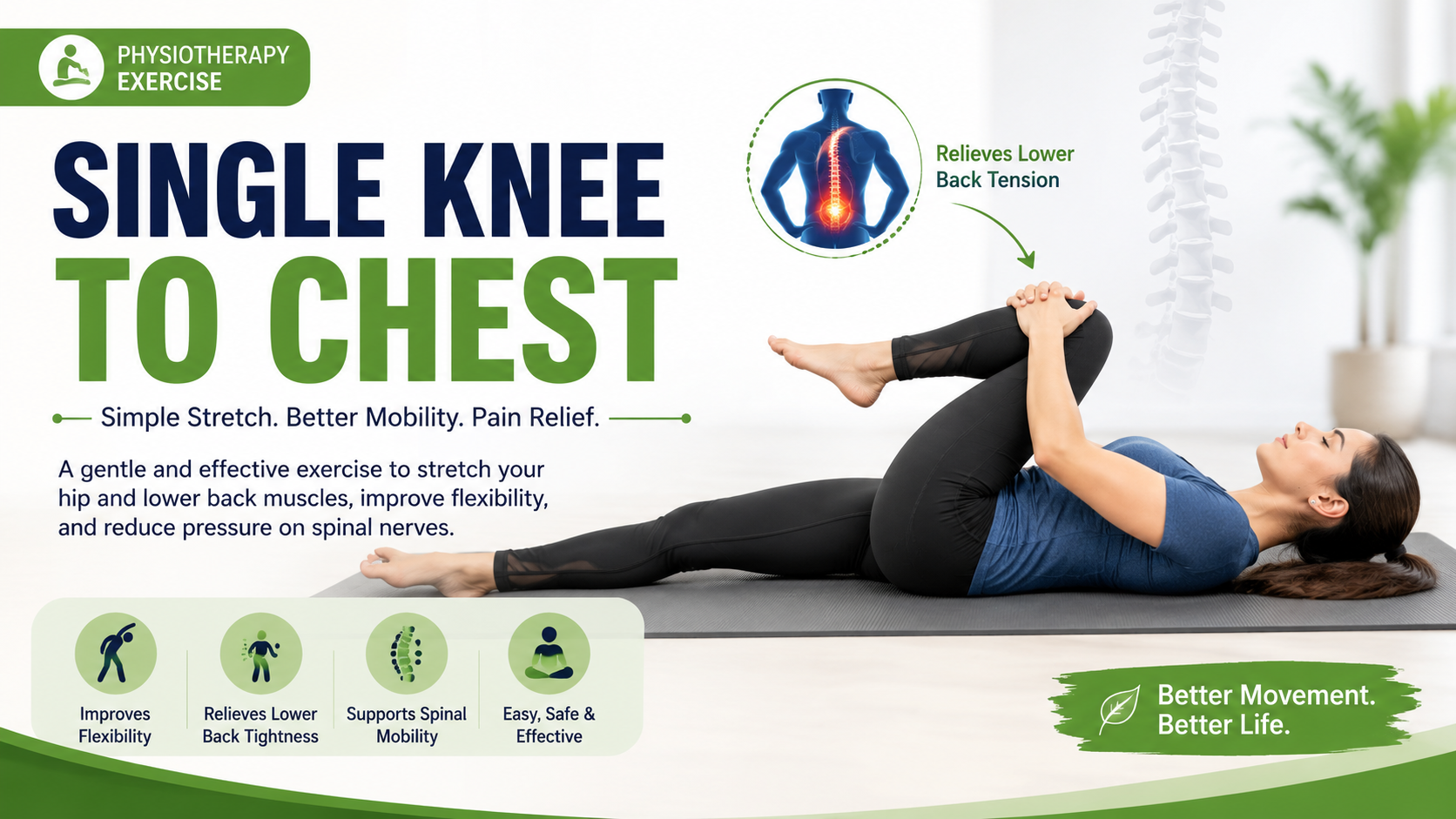
Single Knee to Chest Exercise for Lower Back Relief & Flexibility
What is the Single Knee to Chest Exercise?
The Single Knee to Chest exercise is a simple and effective stretching exercise used in physiotherapy to improve flexibility in the hip and lower back muscles. It also helps reduce pressure on the spinal nerves by creating more space around the nerves as they exit the spine.
This exercise is commonly recommended for improving mobility, relieving lower back discomfort, and promoting better spinal movement.
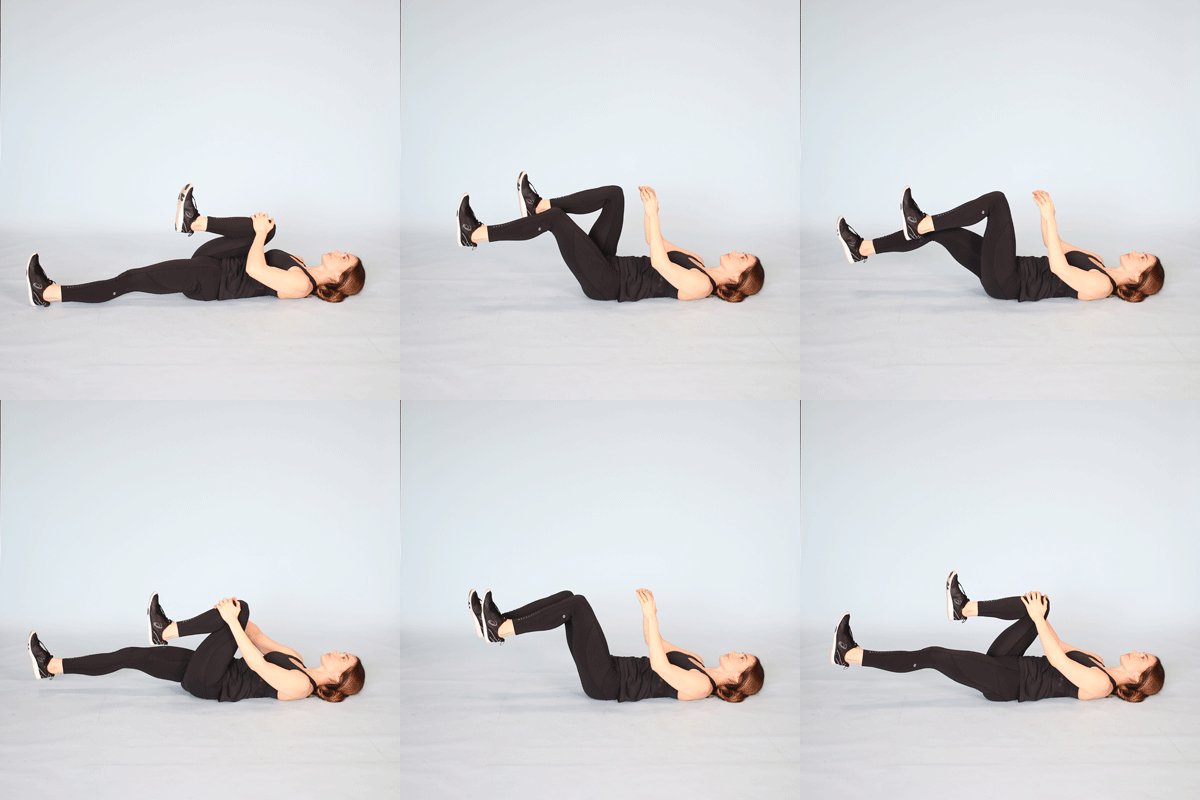
How to Perform the Single Knee to Chest Exercise
Lie down in a supine position with your knees bent and feet flat on the floor.
Gently pull one knee toward your chest.
Interlace your hands over the knee and keep the opposite leg extended straight on the mat.
Hold the position comfortably for a few seconds.
Release your grip and return your foot to the mat.
Repeat the same steps with the opposite leg.
Perform the exercise alternately on both sides.
Start with 5 repetitions and gradually increase the number over time.
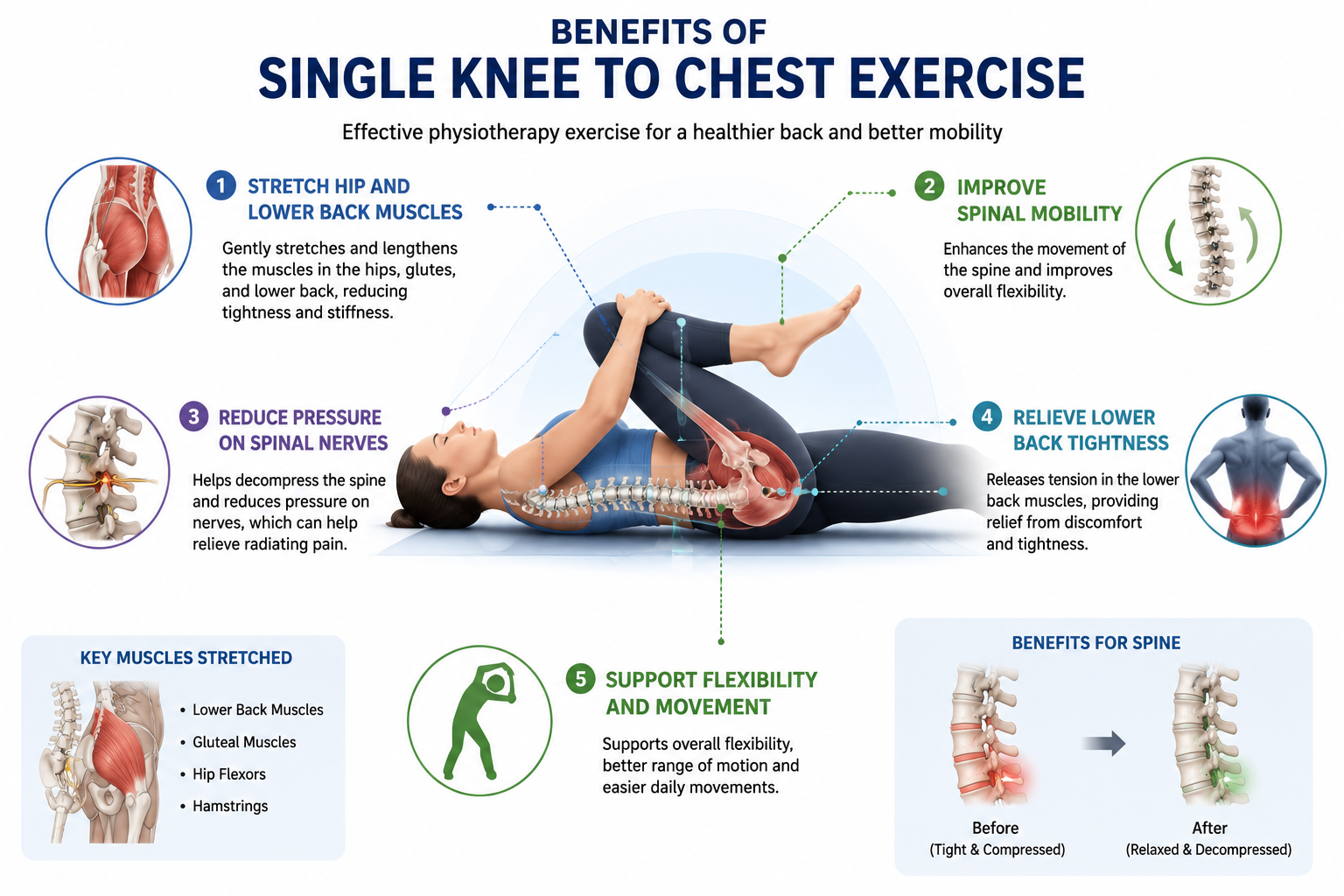
Benefits of Single Knee to Chest Exercise
This exercise is widely used in physiotherapy for improving flexibility and reducing discomfort. It helps:
Stretch hip and lower back muscles
Improve spinal mobility
Reduce pressure on spinal nerves
Relieve lower back tightness
Support flexibility and movement
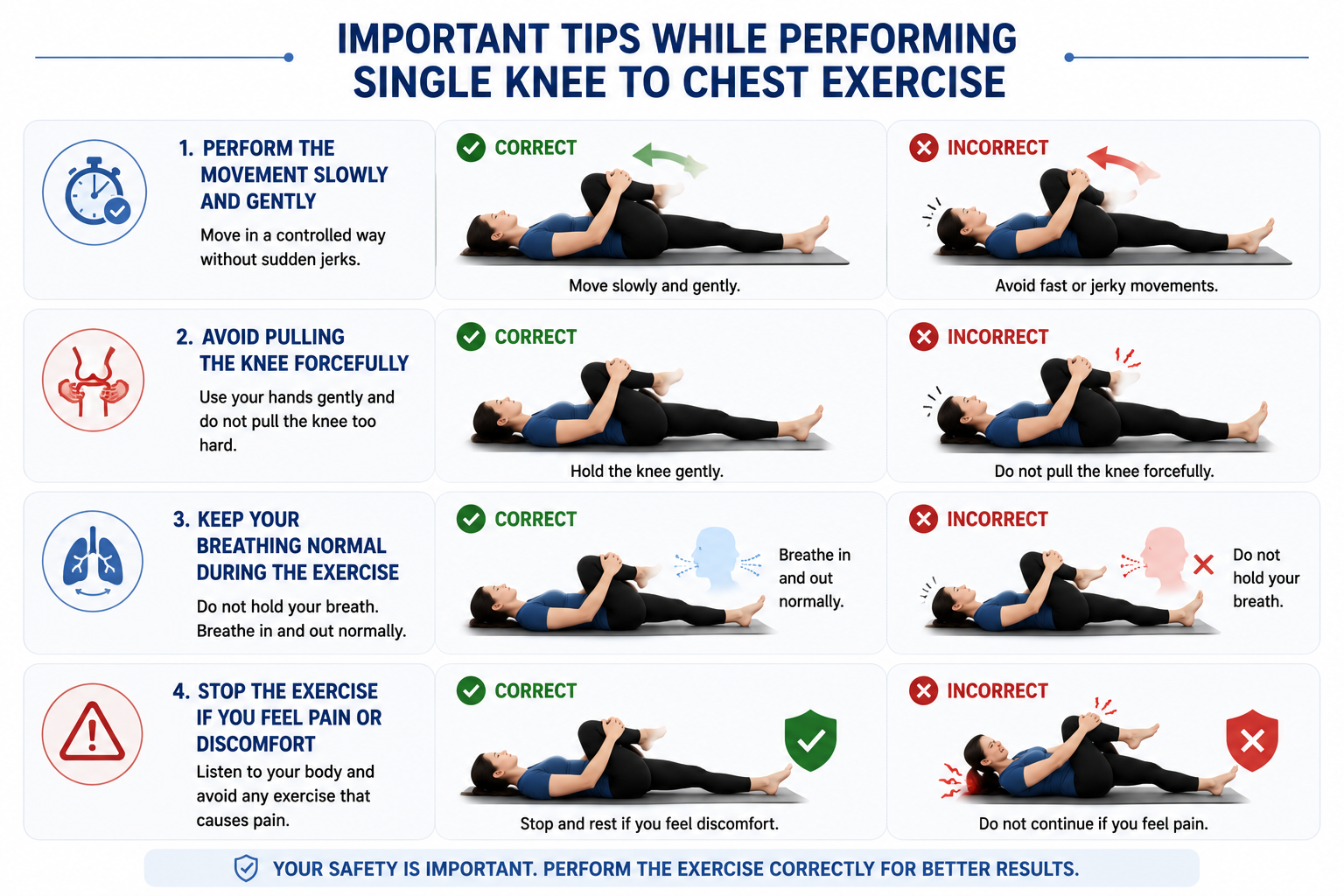
Important Tips While Performing This Exercise
Perform the movement slowly and gently
Avoid pulling the knee forcefully
Keep your breathing normal during the exercise
Stop the exercise if you feel pain or discomfort
हिंदी में निर्देश (Hindi Instructions)
घुटनों को मोड़कर पैरों को ज़मीन पर टिकाएं।
एक घुटने को धीरे-धीरे छाती की ओर खींचें।
हाथों से घुटने को पकड़ें और दूसरे पैर को चटाई पर सीधा रखें।
कुछ सेकंड तक इसी स्थिति में रहें।
पैर को वापस सामान्य स्थिति में लाएं।
दूसरी तरफ भी यही प्रक्रिया दोहराएं।
इस अभ्यास को बारी-बारी से करें।
5 पुनरावृत्ति से शुरुआत करें और धीरे-धीरे संख्या बढ़ाएं।
FAQs1. What is the Single Knee to Chest exercise?
It is a stretching exercise that helps improve flexibility in the hip and lower back muscles while reducing pressure on spinal nerves.
2. What are the benefits of this exercise?
It helps improve flexibility, reduce lower back tightness, support spinal mobility, and relieve nerve pressure.
3. How many repetitions should I start with?
You should begin with 5 repetitions and gradually increase over time.
4. Should both legs be used during the exercise?
Yes, the exercise should be performed alternately on both sides.
5. Can this exercise help lower back pain?
Yes, it may help relieve lower back discomfort by stretching muscles and reducing spinal pressure.
6. How long should I hold the position?
Hold the position comfortably for a few seconds before returning to the starting position.
7. What should I avoid during the exercise?
Avoid forcefully pulling the knee or performing sudden movements.
Share this Article
Help your friends, family, or colleagues discover this guide.