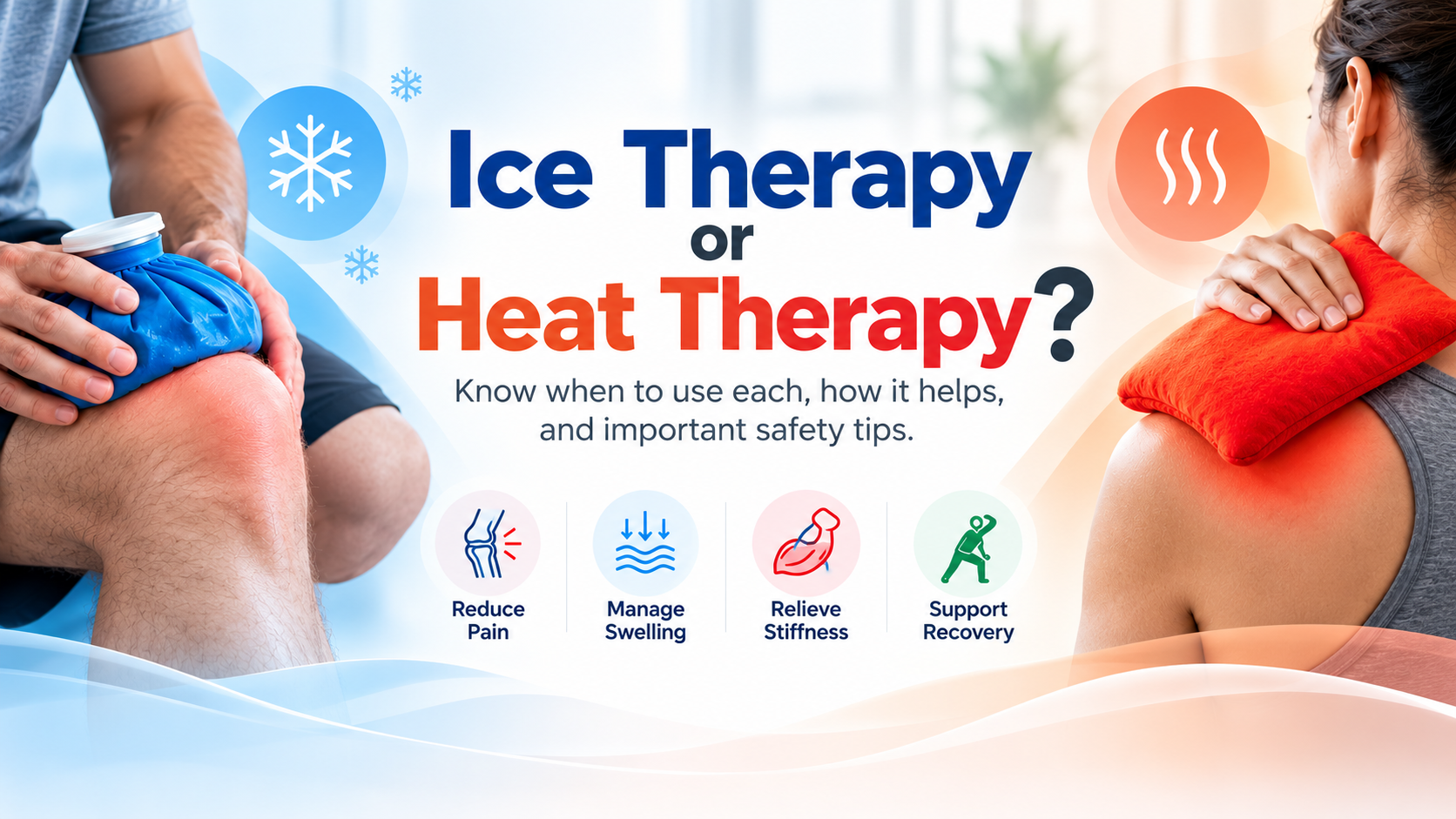
Ice Therapy or Heat Therapy: Which One Should You Use?
Ice Therapy or Heat Therapy?
Heat and cold therapy are commonly used in physiotherapy to help manage pain, swelling, stiffness, and muscle discomfort.
The appropriate choice depends on the type of injury, symptoms, stage of recovery, and treatment goal.
Understanding the Healing Process
Soft-tissue healing is commonly described in three overlapping phases.
1. Inflammatory Phase
This is the early response following tissue injury. Pain, swelling, warmth, and sensitivity may occur.
Cold therapy may help temporarily reduce pain and swelling during this stage.
Heat is generally avoided when it significantly increases swelling or discomfort.
2. Proliferative Phase
During this stage, the body begins producing new tissue and repairing the injured area.
Depending on the condition, heat may be useful for stiffness and preparing tissues for movement or rehabilitation.
3. Remodelling Phase
The newly formed tissue gradually reorganizes and adapts to functional demands.
Heat may be used to help manage persistent stiffness or muscle tightness, particularly before exercise or mobility work.
Healing does not follow exactly the same timeline for every injury. A physiotherapist can help determine the most appropriate treatment.
Heat or Ice: A Simple Guide
Heat TherapyCold TherapyMuscle stiffnessAcute painMuscle tightnessSwellingChronic discomfortRecent injuryBefore stretching/exerciseTemporary pain reliefRelaxationAfter some physical activity
Remember: These are general guidelines, not a diagnosis or treatment plan for every injury.
Heat Therapy
Heat should feel comfortably warm, never excessively hot.
Common options include:
Hot water bottle
Heat wrap
Heating pad
Heated gel pack
Warm bath
Heat can help increase comfort, relax muscles, and prepare tissues for movement.
Important Safety Tips
Use a protective towel or cloth barrier.
Avoid excessive temperatures.
Check the skin regularly.
Do not sleep while using a heating pad.
Stop if burning, excessive redness, or discomfort occurs.
Ice Therapy
Cold therapy can temporarily reduce pain and may help manage swelling following certain acute injuries.
Common options include:
Ice pack
Cold gel pack
Ice massage
Cold-water immersion
For home use, a wrapped cold pack can be used rather than placing ice directly against the skin.
Important Safety Tips
Always use a cloth or towel barrier.
Monitor skin sensation and colour.
Avoid prolonged application.
Stop if excessive numbness, burning, or unusual skin changes occur.
When Should Heat or Cold Be Avoided?
Extra caution is required for people with reduced sensation, poor circulation, certain vascular conditions, or skin problems.
Heat should not be applied directly over open wounds or damaged skin.
If you are unsure whether heat or cold is appropriate, especially after a significant injury, seek advice from a qualified healthcare professional.
Key Takeaway
Cold therapy may be useful for temporary pain and swelling management, particularly after some acute injuries.
Heat therapy may be useful for muscle tightness, stiffness, relaxation, and preparing tissues for movement.
Neither treatment replaces proper assessment and rehabilitation when pain or injury persists.
Final Safety Note
Never apply extreme heat or ice directly to the skin. Use an appropriate barrier, monitor your skin, and stop if you experience unusual pain, burning, numbness, or skin changes.
Frequently Asked Questions
Common therapeutic queries answered by Curevan's medical board.
Share this Article
Help your friends, family, or colleagues discover this guide.