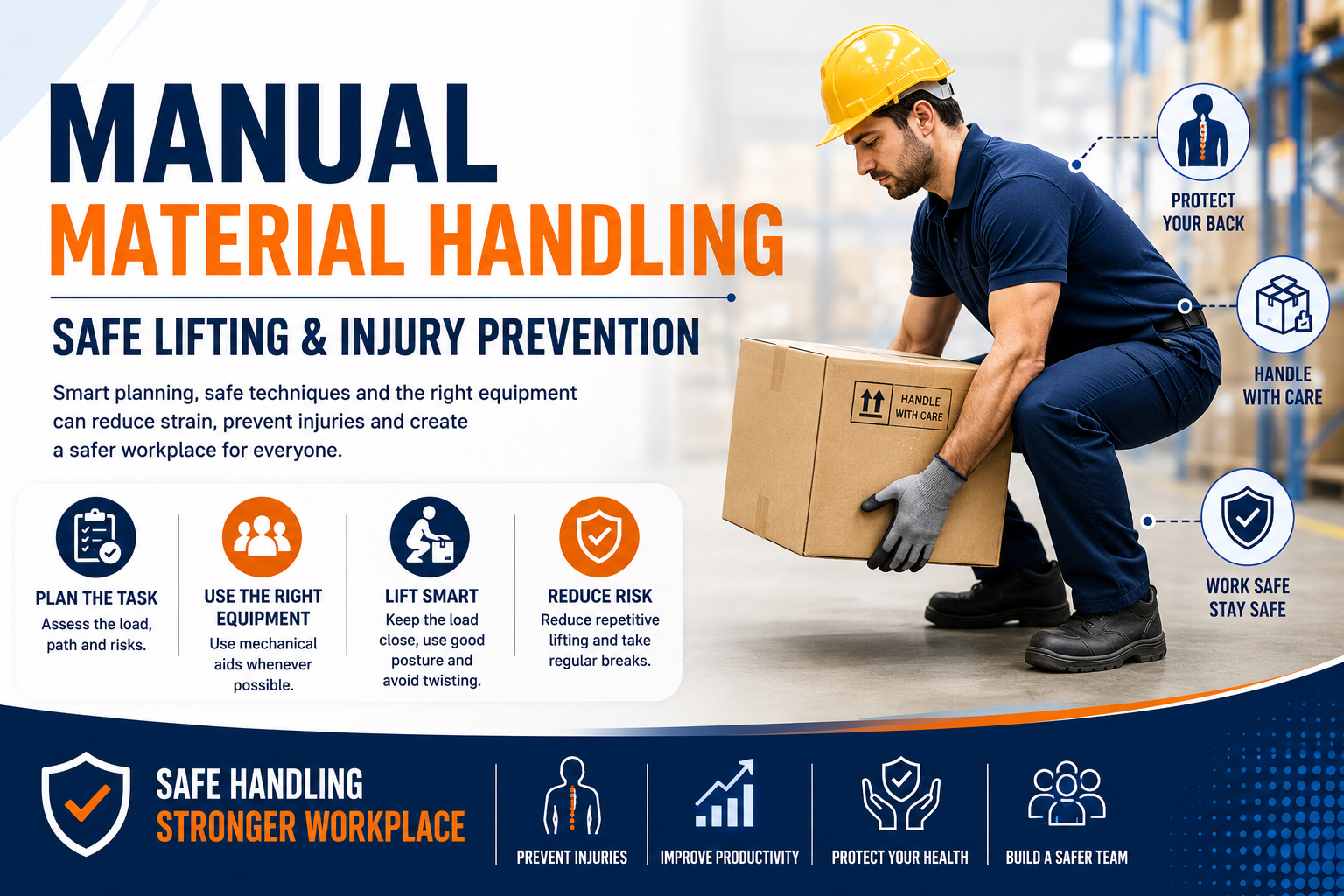
Manual Material Handling: Safe Lifting & Injury Prevention
Manual Material Handling
Manual material handling includes lifting, lowering, carrying, pushing, pulling, holding, and moving objects using physical effort.
Heavy loads, repetitive lifting, awkward postures, twisting, bending, and long carrying distances can increase the risk of musculoskeletal injuries.
The safest approach is to reduce manual handling wherever possible through better workplace design, mechanical aids, and safe work practices.
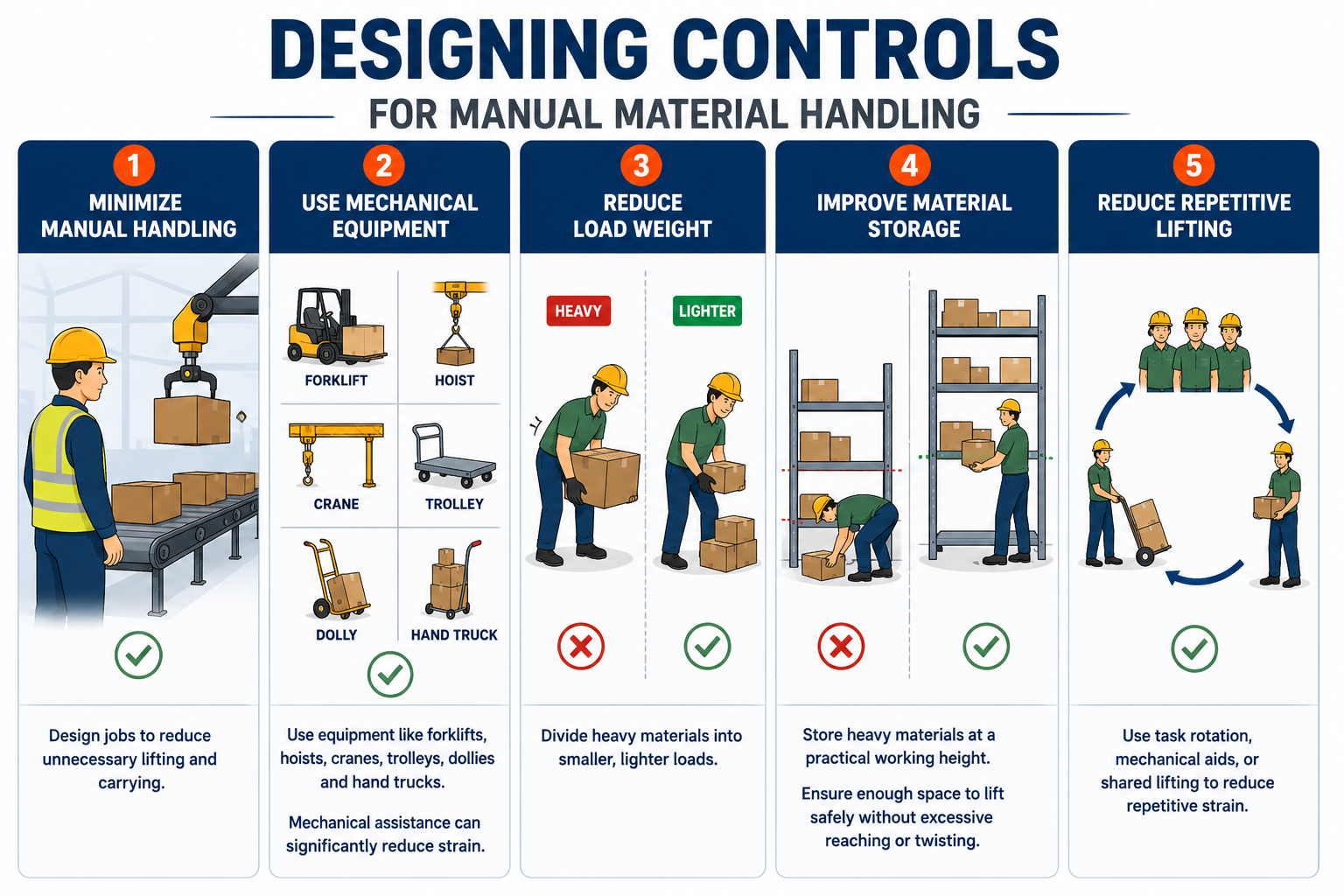
Designing Controls
1. Minimize Manual Handling
Design jobs to reduce unnecessary lifting and carrying whenever possible.
2. Use Mechanical Equipment
Use equipment such as:
Forklifts
Hoists
Cranes
Trolleys
Dollies
Hand trucks
Mechanical assistance can significantly reduce physical strain.
3. Reduce Load Weight
Where possible, divide heavy materials into smaller, lighter loads.
4. Improve Material Storage
Store heavy materials at a practical working height rather than directly on the floor.
Ensure there is enough space to lift without excessive reaching or twisting.
5. Reduce Repetitive Lifting
Use task rotation, mechanical aids, or shared lifting to reduce repetitive physical demands.
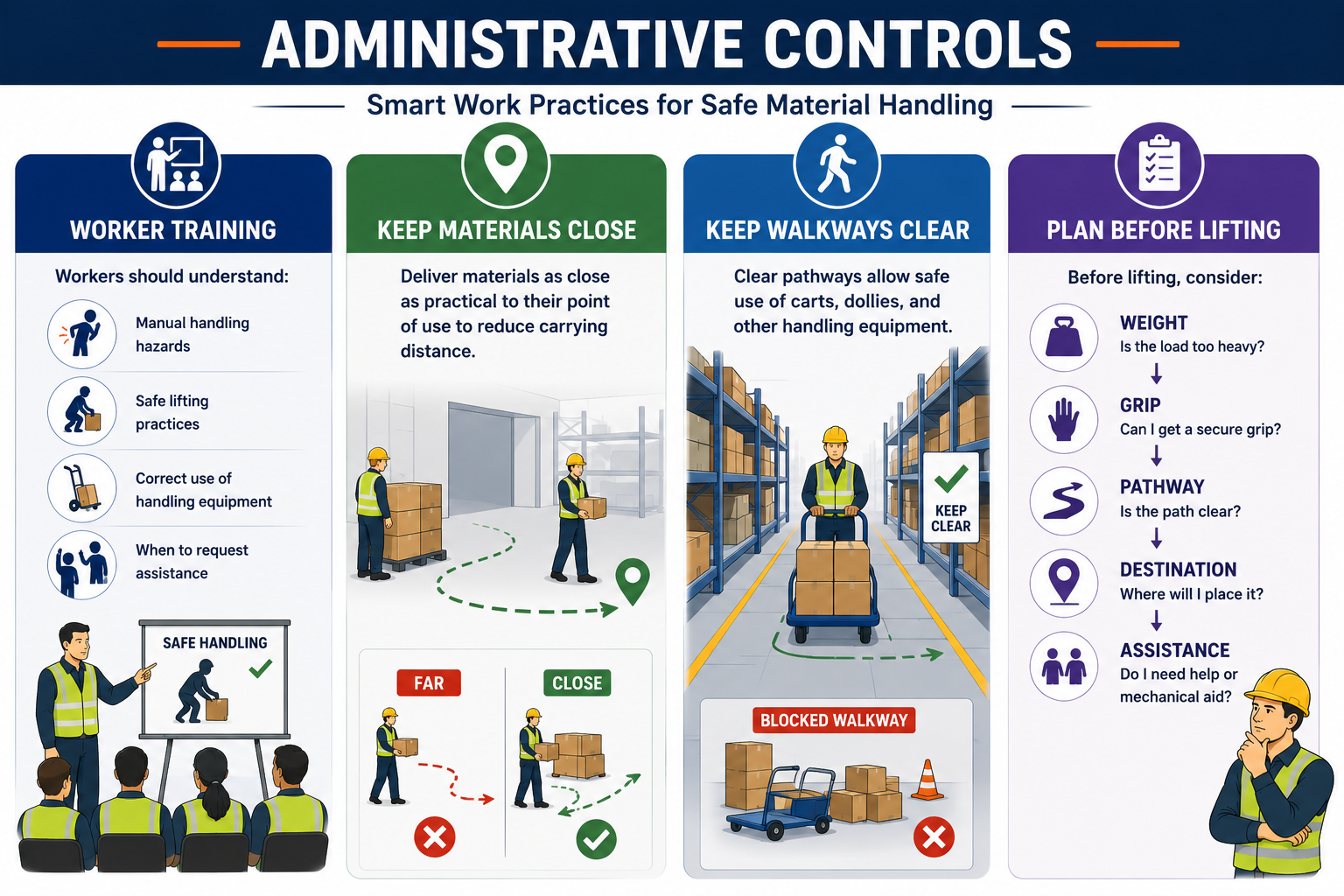
Administrative Controls
Worker Training
Workers should understand:
Manual handling hazards
Safe lifting practices
Correct use of handling equipment
When to request assistance
Keep Materials Close
Deliver materials as close as practical to their point of use to reduce carrying distance.
Keep Walkways Clear
Clear pathways allow safe use of carts, dollies, and other handling equipment.
Plan Before Lifting
Before lifting, consider:
Weight → Grip → Pathway → Destination → Assistance
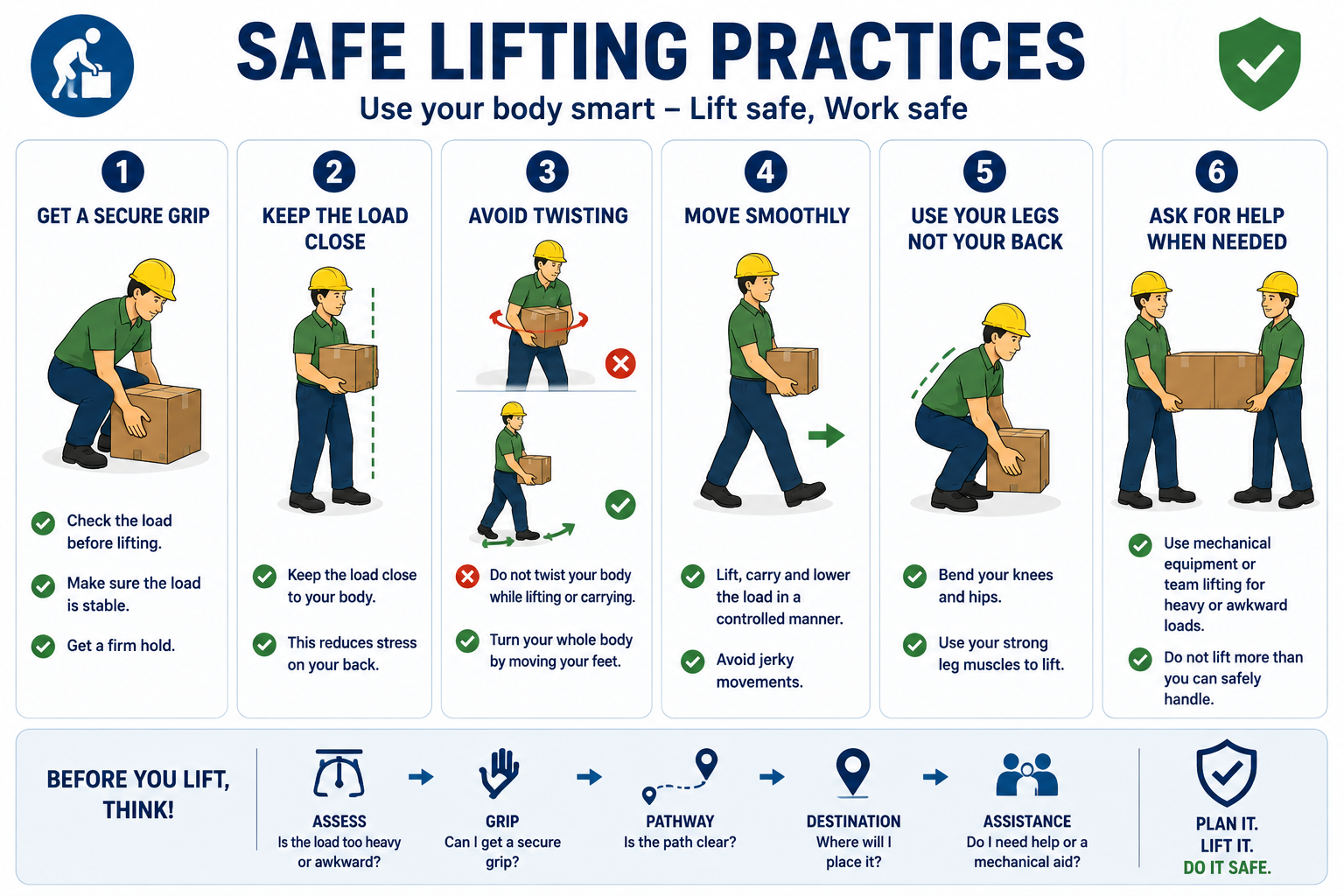
Safe Lifting Practices
Get a Secure Grip
Check the load before lifting and make sure it is stable.
Keep the Load Close
Holding the load close to your body improves control and can reduce mechanical stress on the back.
Avoid Twisting
Turn your whole body by moving your feet rather than twisting while carrying a load.
Move Smoothly
Lift, carry, and lower loads gradually. Avoid sudden jerking movements.
Ask for Help
Use mechanical equipment or team lifting when a load is too heavy or awkward to handle safely.
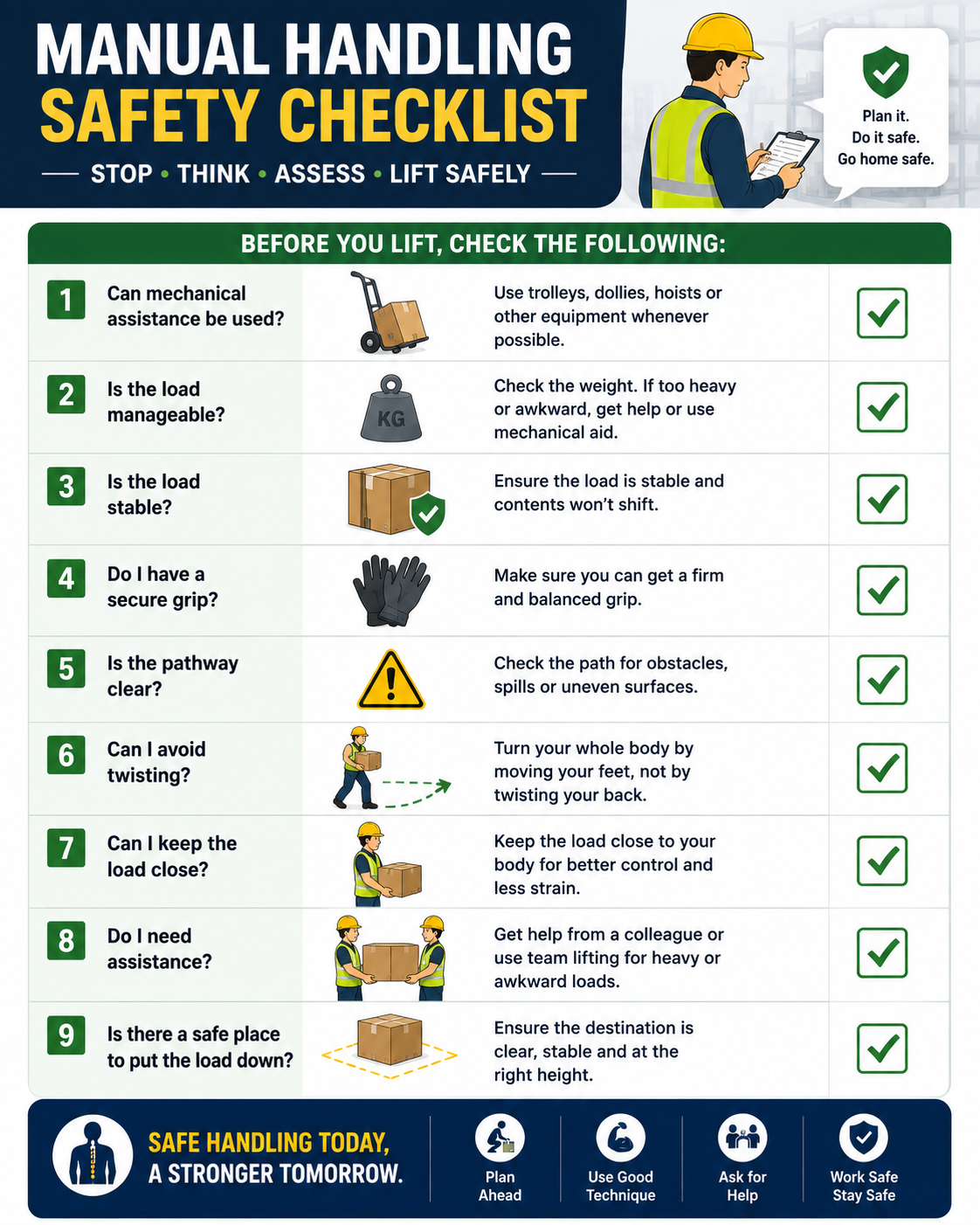
Manual Handling Safety Checklist
Before lifting, ask:
☐ Can mechanical assistance be used?
☐ Is the load manageable?
☐ Is the load stable?
☐ Do I have a secure grip?
☐ Is the pathway clear?
☐ Can I avoid twisting?
☐ Can I keep the load close?
☐ Do I need assistance?
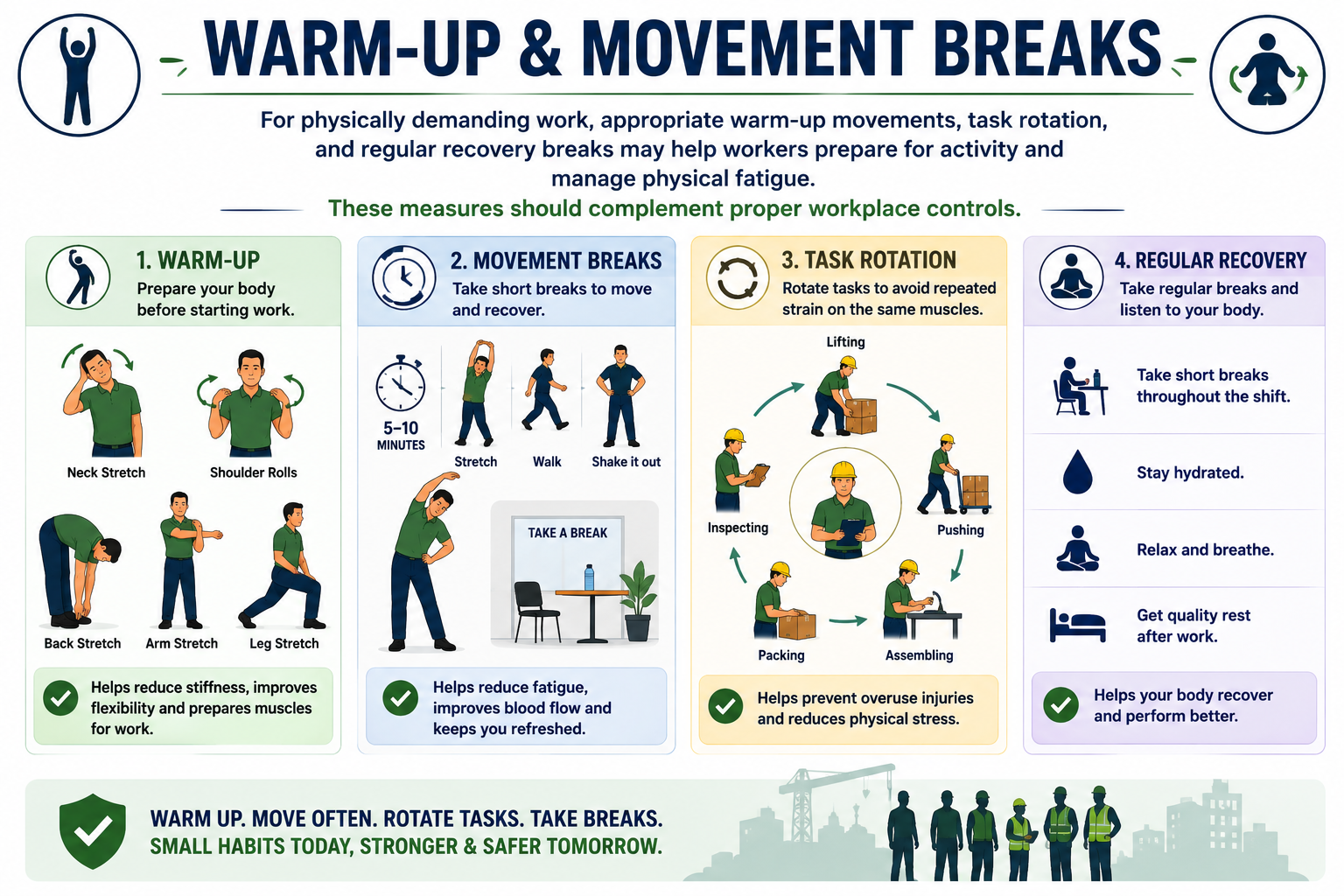
Warm-Up & Movement Breaks
For physically demanding work, appropriate warm-up movements, task rotation, and regular recovery breaks may help workers prepare for activity and manage physical fatigue.
These measures should complement proper workplace controls.
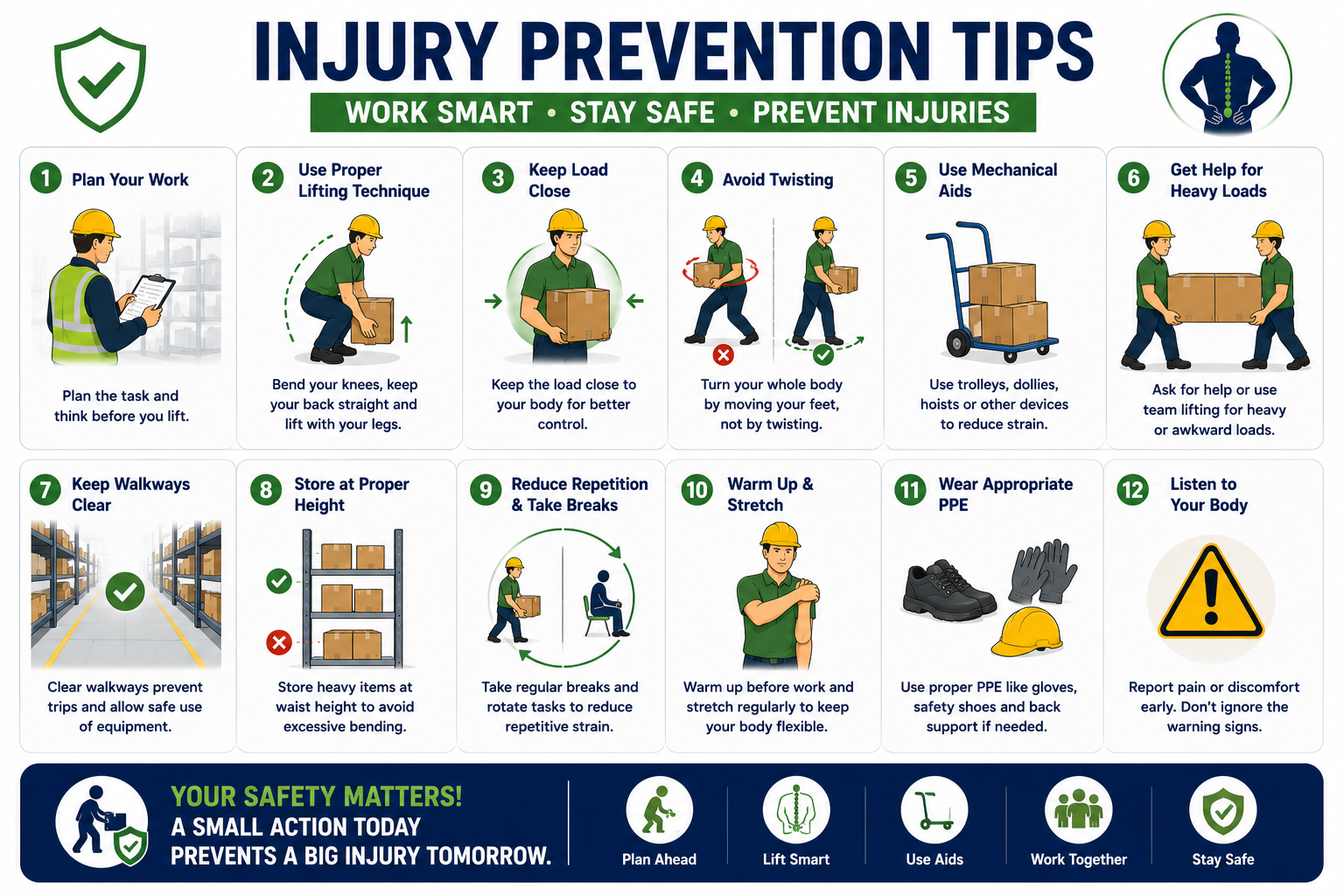
Conclusion
Safe manual material handling starts with controlling the task, not simply relying on lifting technique.
Use mechanical aids, reduce load weight, improve storage and workflow, keep pathways clear, and train workers in safe handling practices.
Reduce the physical demand of the task before asking the worker to handle the load.
Frequently Asked Questions
Common therapeutic queries answered by Curevan's medical board.
Share this Article
Help your friends, family, or colleagues discover this guide.