Thermotherapy: Heat and Cold Therapy in Physiotherapy
Thermotherapy: Heat and Cold Therapy
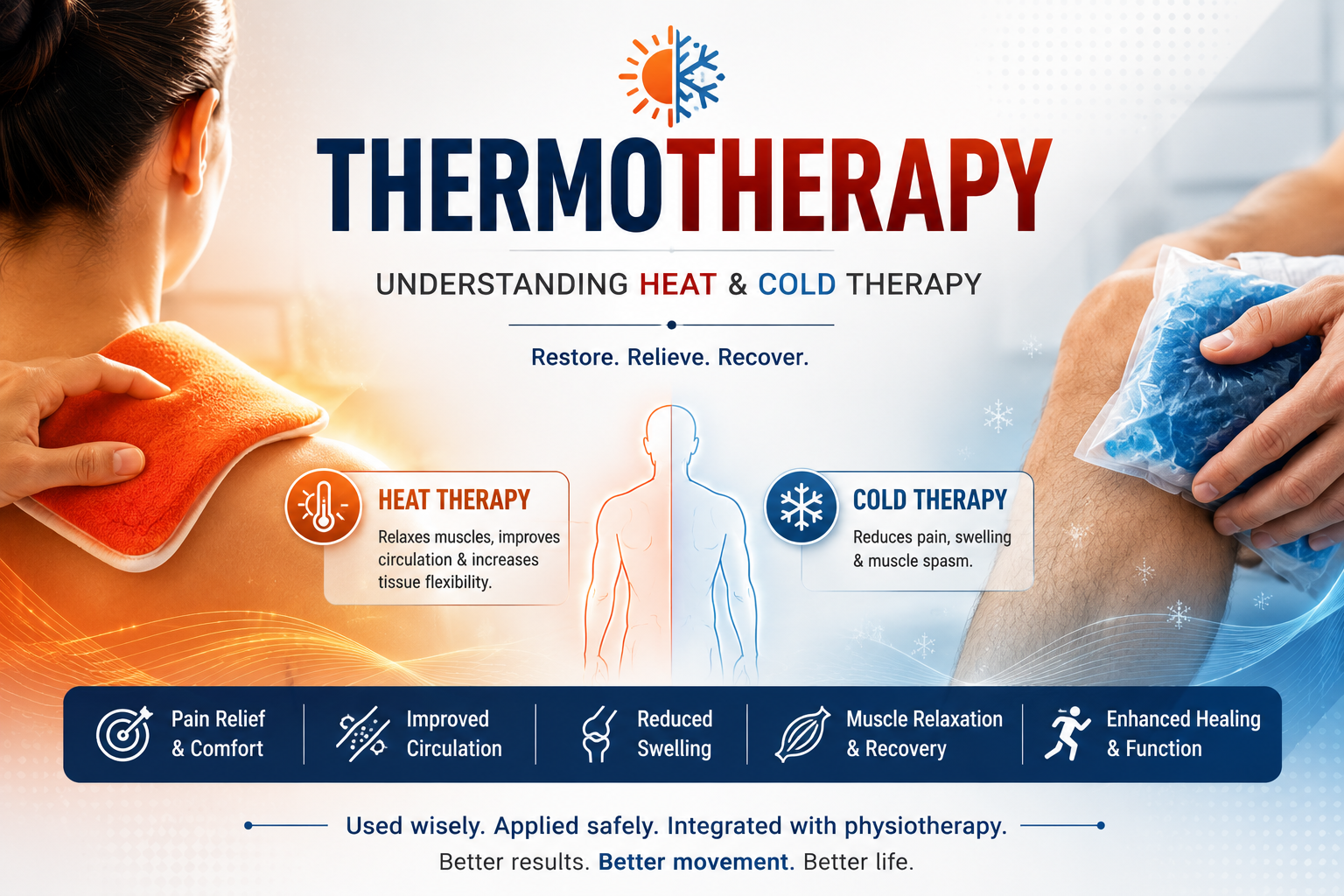
Thermotherapy refers to the therapeutic use of heat and cold to influence the body's tissues and symptoms. Both heat therapy and cold therapy are commonly used as part of physiotherapy and rehabilitation.
Although they work differently, both approaches can help manage symptoms such as pain, muscle tightness, swelling, and discomfort when used appropriately.
The effects of thermal therapy depend on several factors, including the method of application, duration, temperature, treatment area, and depth of the tissues being treated.
Importantly, heat or cold therapy is generally used as a supportive treatment rather than a complete rehabilitation program. The underlying condition may also require appropriate exercise, mobility work, strengthening, or other physiotherapy interventions.
Heat Therapy
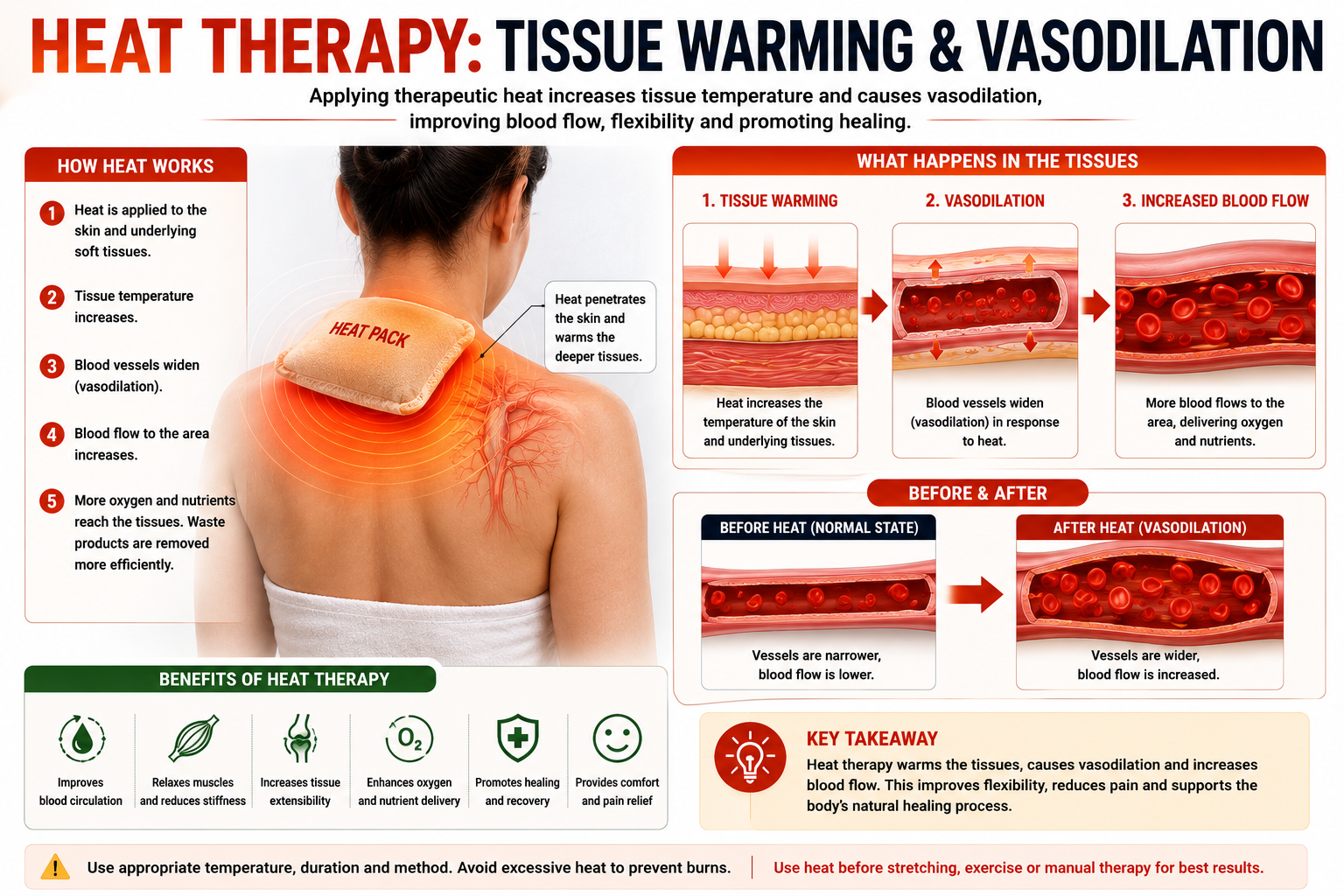
Heat therapy involves applying therapeutic warmth to the body to increase tissue temperature.
It may be used to help reduce muscle tightness, improve comfort, and prepare tissues for movement or therapeutic exercise.
How Does Heat Therapy Work?
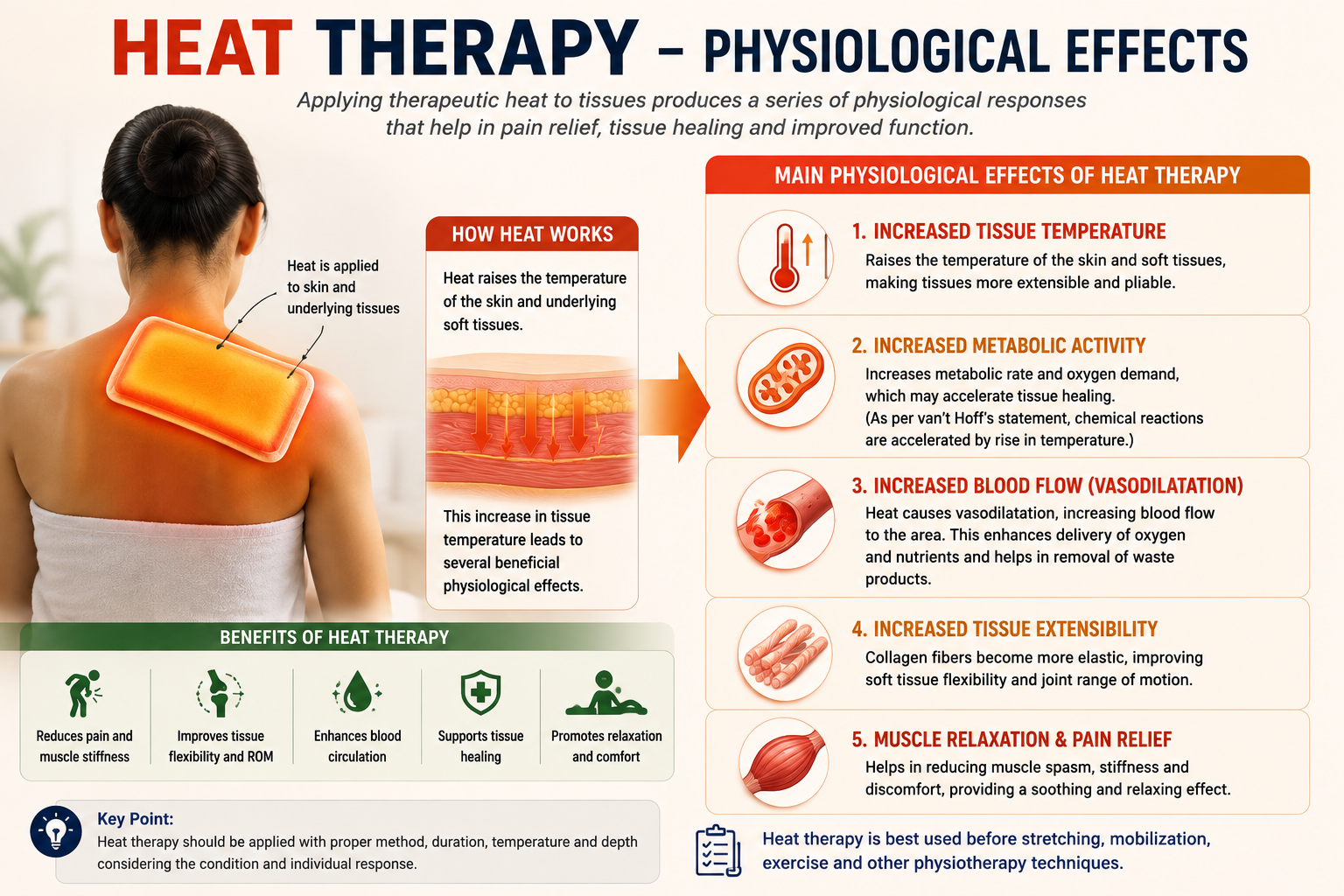
When heat is applied to the skin and underlying soft tissues, several physiological changes can occur.
1. Increased Tissue Temperature
An increase in tissue temperature can increase tissue extensibility and influence the activity of metabolic processes.
Warmer tissues may become more pliable, which can be useful before stretching, mobility exercises, or other physiotherapy techniques.
2. Increased Metabolic Activity
Heating tissues can increase metabolic activity. This may increase the demand for oxygen and nutrients within the treated area.
However, increased metabolic activity is not always beneficial in every clinical situation. The timing of heat application therefore depends on the individual's condition and treatment goals.
3. Increased Blood Flow
Heat can cause vasodilation, meaning that blood vessels widen. This can increase local blood flow to the treated area.
Improved circulation may contribute to relaxation and comfort and can be useful as part of a broader rehabilitation program.
Potential Uses of Heat Therapy
Heat therapy may be considered when the primary goal is to:
Reduce muscle tightness
Improve comfort
Increase soft-tissue flexibility
Prepare an area for stretching or exercise
Promote relaxation
Temporarily reduce pain
Heat is generally more appropriate for some subacute or chronic conditions than for a fresh injury with significant swelling.
The appropriate method and duration should depend on the individual's condition.
Cold Therapy (Cryotherapy)
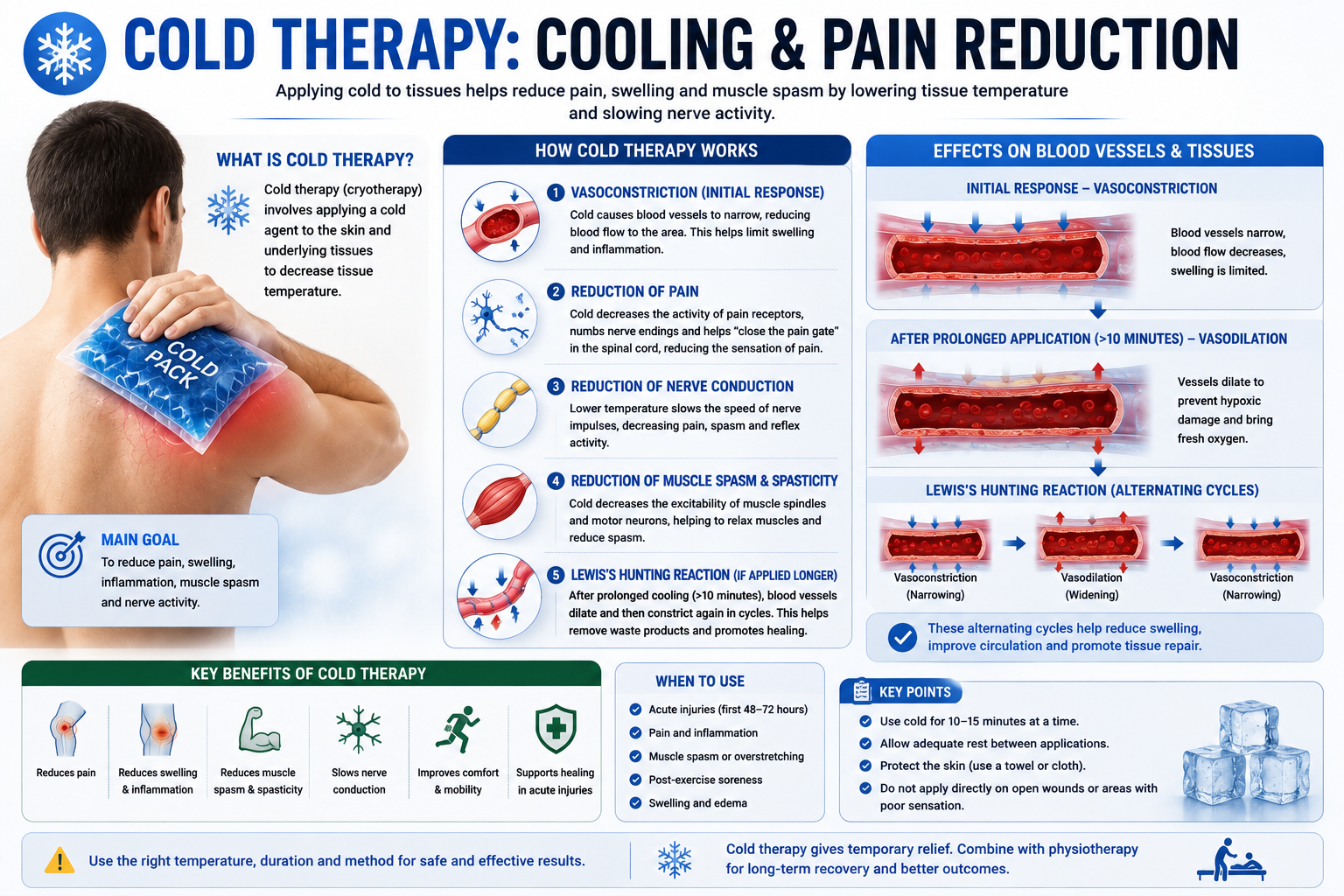
Cold therapy, also known as cryotherapy, involves applying controlled cooling to the body.
It is commonly used to help manage pain and swelling, particularly following certain acute injuries or physical activity.
How Does Cold Therapy Work?
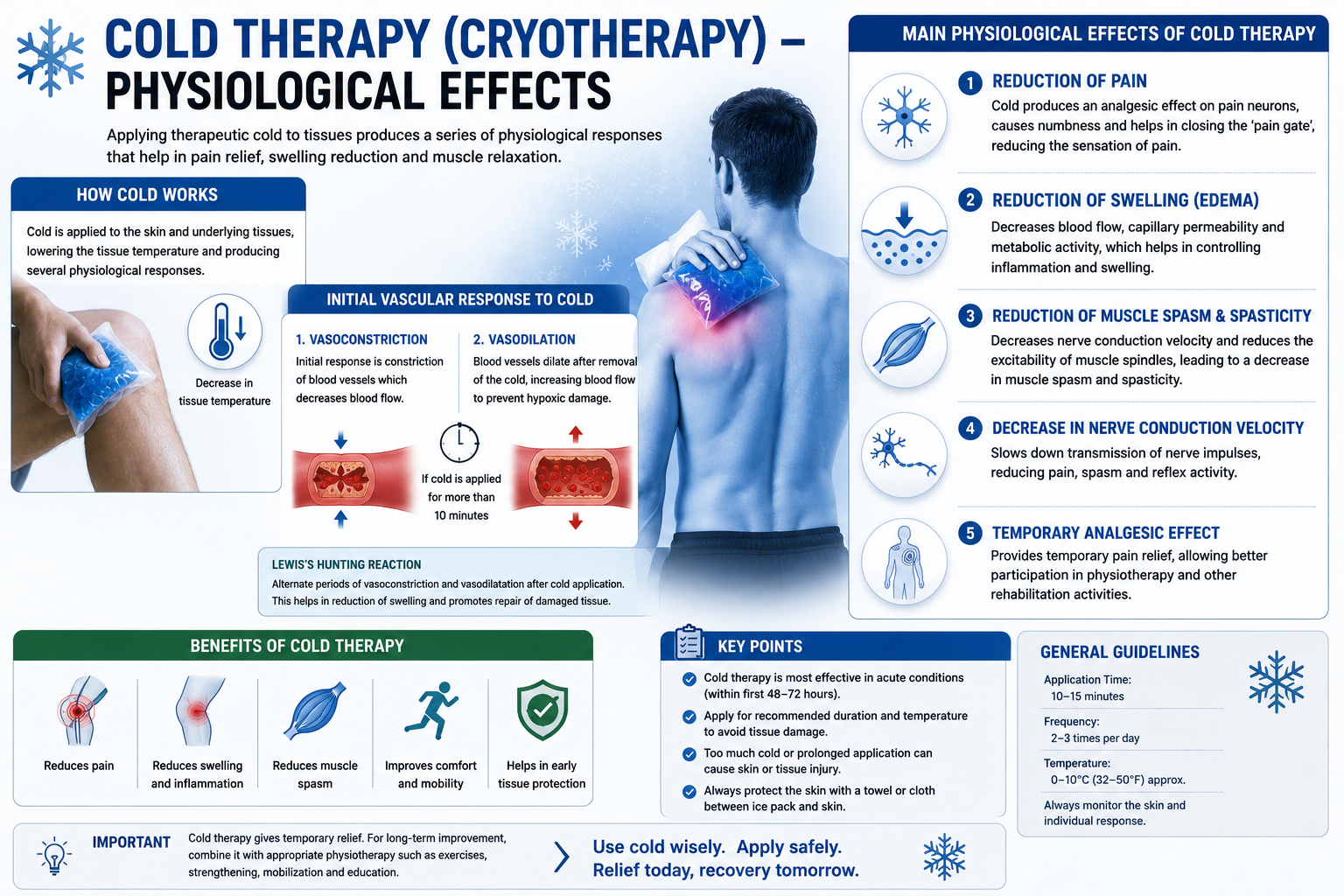
Cooling the skin and underlying tissues produces several physiological effects.
1. Vasoconstriction
The initial response to cooling is generally vasoconstriction, in which blood vessels narrow and local blood flow decreases.
This can help limit excessive blood flow to the area and may contribute to controlling swelling in appropriate circumstances.
2. Reduction in Pain
One of the most recognized effects of cryotherapy is temporary pain reduction.
Cooling can decrease the sensitivity of sensory nerves and slow nerve conduction, producing a temporary numbing or analgesic effect.
This can make movement or rehabilitation exercises more comfortable in some situations.
3. Reduced Muscle Spasm and Activity
Cooling can influence nerve conduction and muscle activity. As a result, it may help temporarily reduce muscle spasm or excessive muscle activity in some circumstances.
The depth and duration of cooling required can vary depending on the tissues involved.
Cold Therapy and Swelling
Cold therapy is often considered during the early management of certain acute injuries because cooling can reduce local blood flow and help manage pain and swelling.
However, swelling is part of the body's normal response to tissue injury, and excessive or prolonged cooling is not necessarily beneficial.
For this reason, cold therapy should be used appropriately rather than automatically after every injury.
Heat vs Cold Therapy
Heat TherapyCold TherapyIncreases tissue temperatureDecreases tissue temperaturePromotes vasodilationInitially promotes vasoconstrictionMay improve tissue flexibilityMay reduce nerve conductionCan help with muscle tightnessCan help reduce pain and swellingOften useful before mobility or exerciseOften useful for acute symptom managementProduces a warming and relaxing effectProduces a cooling and numbing effect
Does Cold Therapy Provide Permanent Pain Relief?
Cold therapy can provide temporary pain relief, but it does not necessarily address the underlying cause of pain.
Once the cooling effect wears off, symptoms may return if the underlying problem has not been addressed.
For longer-term improvement, an appropriate physiotherapy program may include:
Strengthening exercises
Mobility exercises
Stretching
Movement retraining
Manual therapy when appropriate
Postural or ergonomic advice
Gradual return to normal activity
The treatment should be based on the individual's condition and functional goals.
When Should Heat or Cold Be Used?
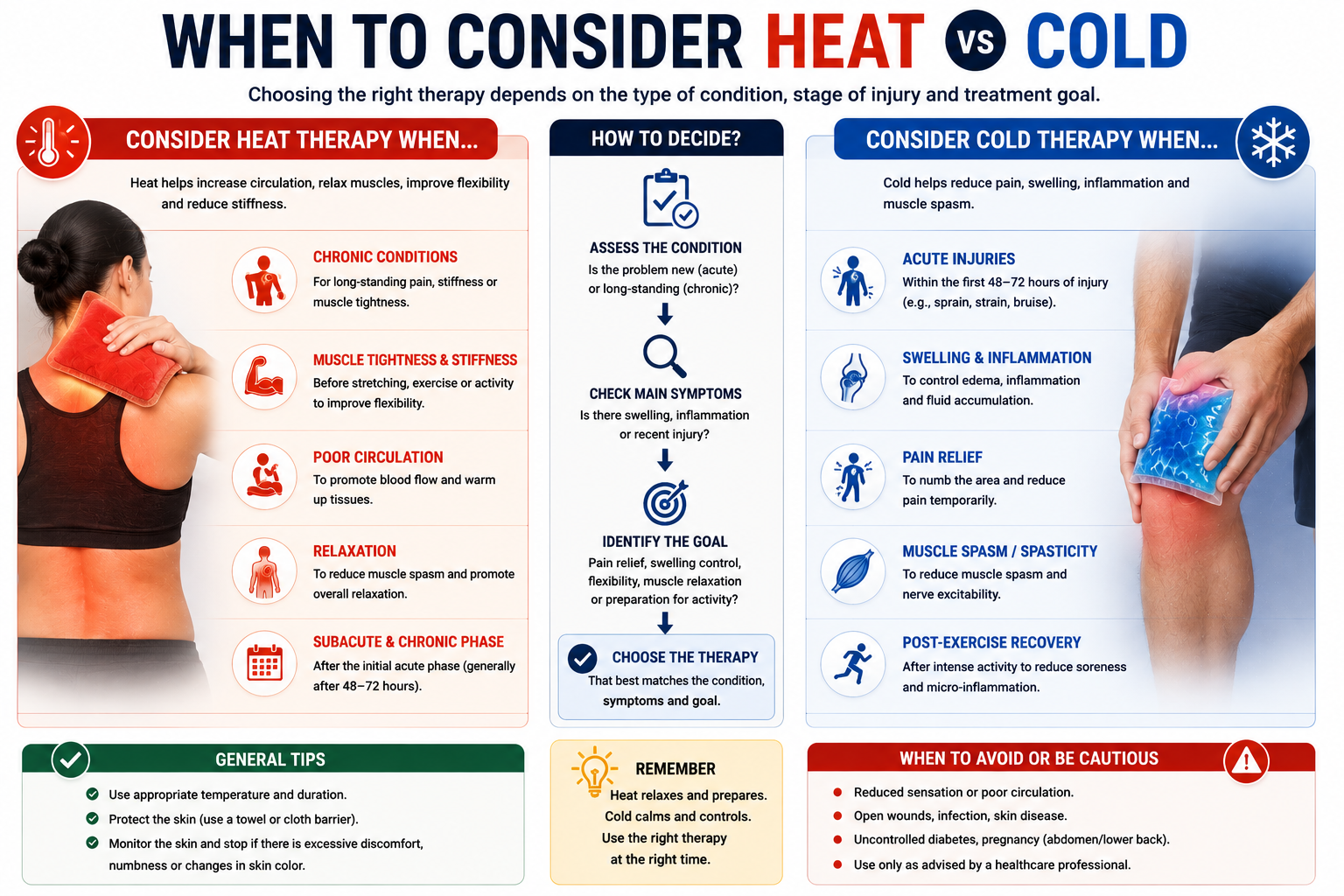
There is no single rule that applies to every injury or pain condition.
The choice between heat and cold depends on factors such as:
The type of condition
Whether the problem is acute or longstanding
Presence of swelling
Muscle tightness
Pain sensitivity
Treatment goals
The individual's response to the treatment
A physiotherapist can assess the condition and determine whether thermal therapy is appropriate and how it should be incorporated into rehabilitation.
Factors That Influence the Effect of Thermal Therapy
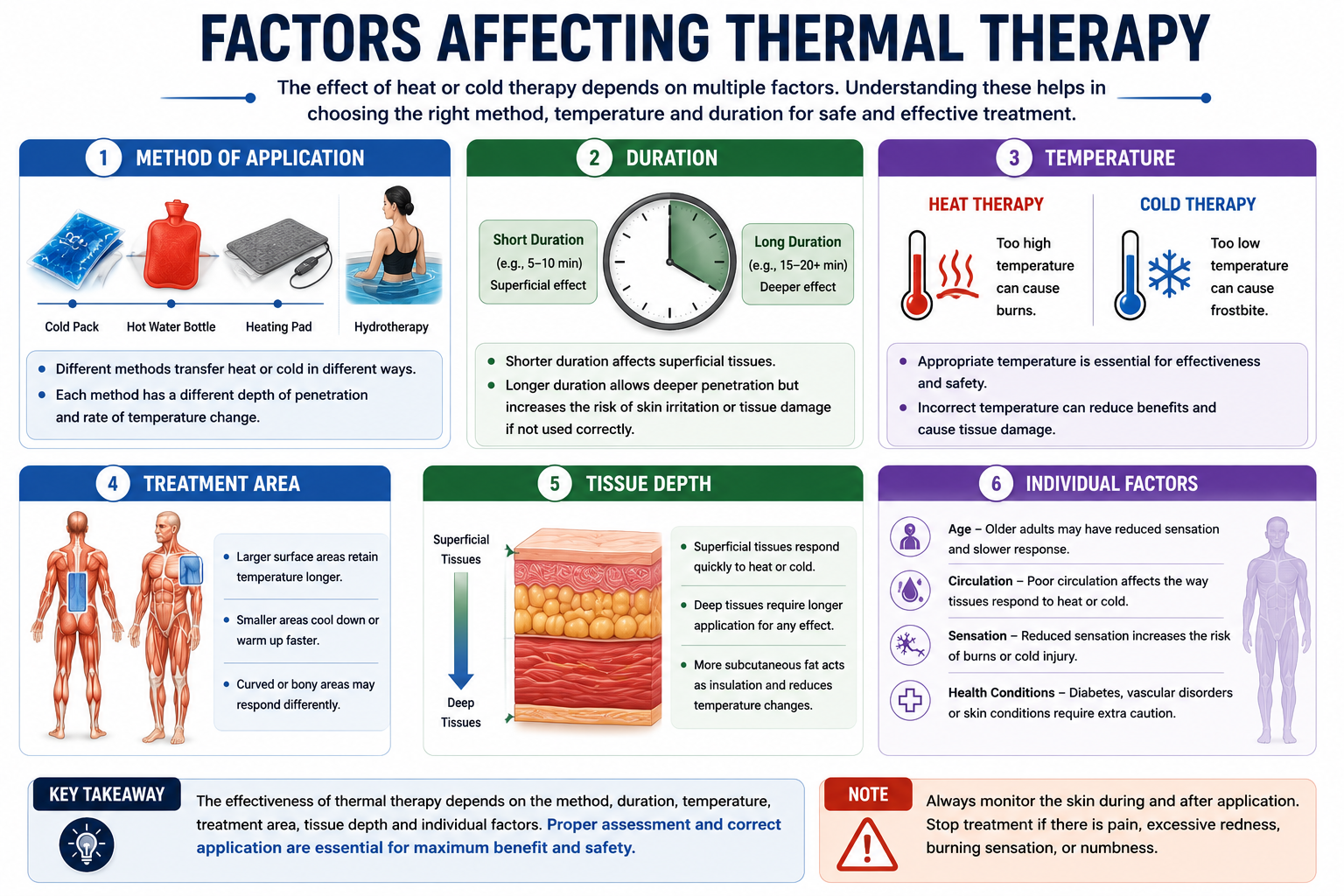
The response to heat or cold can vary from person to person.
Important factors include:
Method of Application
Different methods, such as heat packs, cold packs, warm water, or other modalities, produce different effects.
Duration
The length of application influences how deeply and intensely the tissues are affected.
Temperature
Temperature should be controlled carefully to achieve a therapeutic effect while protecting the skin and underlying tissues.
Treatment Area
Larger or smaller treatment areas may respond differently.
Tissue Depth
The amount of subcutaneous tissue and the depth of the target tissue can influence how quickly temperature changes occur.
Safety Considerations
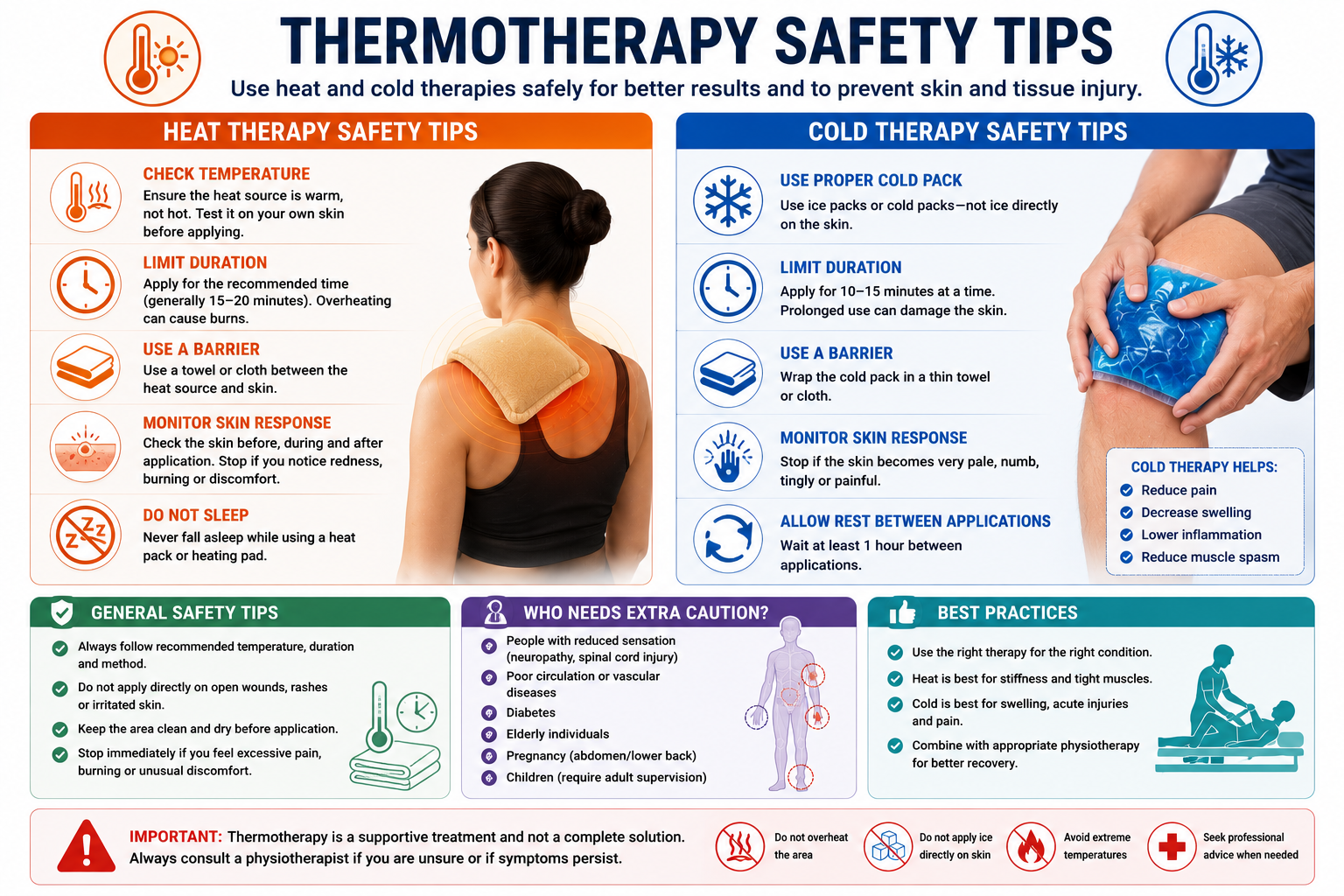
Heat and cold therapies should not be applied indiscriminately.
Extra caution is needed in people with conditions that affect skin sensation, circulation, or the ability to recognize excessive heat or cold.
Thermal applications should also be protected from direct skin damage and should not be used at temperatures or durations that could cause burns or cold injury.
If pain, skin discoloration, excessive numbness, burning, or unusual discomfort develops, the application should be stopped and professional advice sought.
Heat and Cold Therapy in Physiotherapy
Heat and cold therapy are best viewed as adjuncts to rehabilitation rather than standalone treatments.
A physiotherapist may use thermal therapy to make movement, exercise, stretching, or other treatment techniques more comfortable.
The overall goal is to improve function and address the underlying factors contributing to pain or movement limitations.
Conclusion
Heat and cold therapy can be useful tools in physiotherapy when selected and applied appropriately.
Heat therapy may help improve comfort, tissue flexibility, and muscle relaxation, while cold therapy can help temporarily reduce pain and manage swelling in appropriate situations.
The effectiveness of either approach depends on the individual's condition, the treatment method, duration, temperature, and depth of the targeted tissue.
For persistent or recurrent pain, thermal therapy should not replace proper assessment and rehabilitation. A physiotherapist can help determine the most appropriate treatment approach for your specific needs.
Frequently Asked Questions
Common therapeutic queries answered by Curevan's medical board.
Share this Article
Help your friends, family, or colleagues discover this guide.